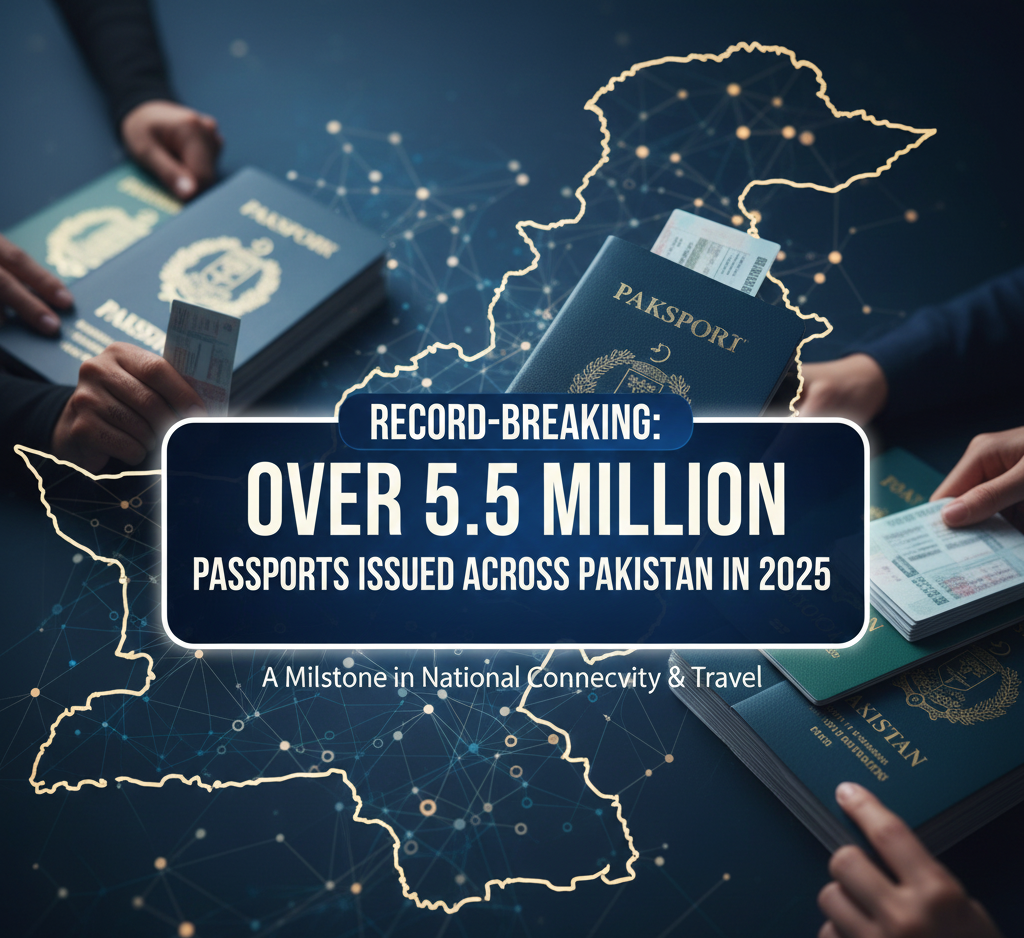
Pakistan witnessed an extraordinary administrative milestone in 2025 as passport issuance crossed the historic mark of 5.5 million documents nationwide. This unprecedented figure clearly reflects a deep social and economic shift taking place across the country. Citizens from urban centers and rural regions alike rushed to obtain travel documents, signaling changing aspirations, global exposure, and urgent mobility needs. In Lahore, Pakistan, the impact appeared even more pronounced, as long queues and extended working hours at passport offices became the norm. For Chal Pakistan, this surge offers a compelling story of ambition, resilience, and transformation unfolding in real time.
The passport demand rise in Pakistan 2025 did not occur suddenly. Instead, it built momentum gradually due to multiple intersecting factors. Economic uncertainty encouraged overseas job exploration, while education-driven migration gained popularity among youth. Additionally, relaxed travel restrictions worldwide reignited tourism and family reunions. Consequently, the passport emerged as a critical tool for opportunity rather than merely an identification document.
Understanding the Scale of the Passport Boom
The numbers recorded in 2025 surpassed all previous annual passport issuance records in Pakistan’s history. Government data showed a sharp increase month after month, particularly during the second and third quarters. This trend demonstrated consistency rather than a seasonal spike. More importantly, the surge cut across demographics, with first-time applicants forming a significant portion.
The passport demand rise in Pakistan 2025 reflects shifting national behavior. People now view international mobility as essential rather than optional. Therefore, the passport office transformed into a gateway to future planning. From skilled professionals to labor workers, everyone recognized the urgency of documentation. As a result, processing systems faced immense pressure, forcing authorities to modernize workflows rapidly.
Economic Pressures Driving Travel Intentions
Economic factors played a dominant role in accelerating passport applications. Inflation, currency fluctuations, and limited local employment opportunities pushed individuals to consider work abroad. Middle Eastern countries, Europe, and Southeast Asia remained top destinations. Moreover, freelance and remote work trends encouraged digital nomads to legalize their international movements.
In Lahore, Pakistan, job consultants and visa advisors experienced unprecedented demand. People no longer waited for confirmed visas before applying. Instead, they prioritized readiness. This proactive mindset significantly contributed to the passport demand rise in Pakistan 2025, reshaping how citizens approach global mobility.
Youth Aspirations and Education Abroad
Another critical driver emerged from Pakistan’s youth population. Students increasingly pursued higher education abroad, aiming for globally recognized degrees and exposure. Scholarships, exchange programs, and post-study work options made foreign universities more attractive. Consequently, passport applications among individuals aged eighteen to twenty-five increased dramatically.
The passport demand rise in Pakistan 2025 mirrors a generation determined to compete internationally. Parents supported these ambitions, viewing education as a long-term investment. Therefore, passport offices saw entire families applying together, reflecting collective planning rather than individual impulse.
Overseas Pakistanis and Family Reunification
Family reunification added another layer to the surge. Overseas Pakistanis invited relatives for visits, weddings, and extended stays. Additionally, many expatriates updated expired passports for themselves and their children. These combined actions amplified the issuance volume significantly.
The passport demand rise in Pakistan 2025 thus connected emotional motivations with administrative urgency. Families prioritized documentation to maintain cross-border relationships. This emotional dimension reinforced the importance of efficient passport services nationwide.
Government Response and System Improvements
Faced with overwhelming demand, authorities introduced extended office hours, mobile passport units, and online appointment systems. These changes improved accessibility while reducing congestion. Biometric verification processes became faster, and staff received additional training to manage workloads efficiently.
Although challenges persisted, reforms prevented system collapse. The passport demand rise in Pakistan 2025 therefore acted as a catalyst for modernization. Citizens benefited from improved transparency, while government institutions gained valuable operational experience.
Regional Trends and Urban Concentration
Urban centers led the application surge, with Lahore, Pakistan, ranking among the highest contributors. The city’s dense population, educational institutions, and employment hubs fueled demand consistently. Meanwhile, smaller cities and rural areas showed gradual but steady increases.
This distribution highlighted unequal access in earlier years. However, mobile units helped bridge gaps. The passport demand rise in Pakistan 2025 thus exposed regional disparities while encouraging inclusive solutions.
Travel, Tourism, and Cultural Exposure
Tourism revival also influenced passport issuance. Pakistanis increasingly explored destinations in Turkey, Azerbaijan, Malaysia, and Central Asia. Social media exposure played a vital role, inspiring travel aspirations. Consequently, passports became tools for cultural exchange and personal enrichment.
The passport demand rise in Pakistan 2025 aligned closely with this renewed travel enthusiasm. People no longer limited themselves to domestic tourism. Instead, they embraced global exploration confidently.
Media Influence and Public Awareness
Media coverage amplified awareness regarding passport procedures and processing timelines. News reports, digital platforms, and influencers shared experiences, guiding applicants effectively. This transparency reduced fear and confusion, encouraging timely applications.
As awareness improved, the passport demand rise in Pakistan 2025 sustained momentum. Information accessibility empowered citizens to navigate bureaucracy efficiently.
Security, Identity, and Documentation Awareness
Beyond travel, passports gained importance as secure identity documents. Many citizens updated their records to avoid future complications. This preventive approach increased applications even among those without immediate travel plans.
The passport demand rise in Pakistan 2025 therefore reflected improved civic awareness. People recognized documentation as essential for security, legality, and international recognition.
Women Participation and Social Change
Women participation in passport applications increased notably. Female students, professionals, and entrepreneurs pursued opportunities abroad independently. This shift indicated broader social transformation and empowerment.
The passport demand rise in Pakistan 2025 thus symbolized gender progress. Documentation access enabled women to participate actively in global spaces.
Challenges Faced During Peak Demand
Despite improvements, applicants faced delays during peak periods. Technical glitches, appointment shortages, and staffing limitations caused frustration. However, authorities responded promptly, introducing contingency measures.
These challenges highlighted system stress. Nevertheless, the passport demand rise in Pakistan 2025 proved manageable through adaptive governance and public cooperation.
Impact on Travel Industry and Businesses
Travel agencies, airlines, and visa consultants benefited significantly. Increased passport issuance expanded customer bases. Consequently, ancillary industries experienced growth, contributing to economic activity.
The passport demand rise in Pakistan 2025 thus created ripple effects across sectors, reinforcing mobility’s economic value.
Long-Term Implications for Pakistan
This record-breaking year set a new baseline for future planning. Authorities must anticipate sustained demand. Investments in digital infrastructure, staffing, and regional offices will remain essential.
The passport demand rise in Pakistan 2025 offers valuable insights for policymakers, highlighting evolving citizen needs and global integration trends.
Looking Ahead with Optimism
As Pakistan continues navigating economic and social transitions, mobility will remain central. Passports symbolize access, ambition, and preparedness. The 2025 milestone therefore represents more than numbers. It reflects a nation actively engaging with the world.
Chal Pakistan recognizes this moment as a defining chapter in Pakistan’s modern narrative. The journey ahead promises continued transformation, driven by aspiration, adaptability, and global connectivity.
Frequently Asked Questions
What caused the passport demand rise in Pakistan 2025?
Economic pressure, education abroad, overseas employment, tourism revival, and improved awareness contributed collectively.
Which city saw the highest number of applications?
Lahore, Pakistan, ranked among the top cities due to population density and opportunity concentration.
Did students significantly impact passport demand?
Yes, students pursuing international education formed a major applicant segment.
How did the government manage record demand?
Authorities extended office hours, introduced mobile units, and improved digital systems.
Was tourism a major factor in increased applications?
Yes, renewed international tourism interest encouraged many first-time applicants.
Did women participation increase in 2025?
Yes, more women applied independently for education, work, and travel.
Were there processing delays during peak months?
Some delays occurred, but authorities implemented corrective measures promptly.
Did overseas Pakistanis influence the surge?
Yes, family reunification and document renewals contributed significantly.
Will passport demand remain high in coming years?
Trends suggest sustained demand due to ongoing global engagement.
How does this milestone impact Pakistan’s global image?
It reflects increased mobility, awareness, and international integration of Pakistani citizens.