By Chal Pakistan – Lahore, Pakistan
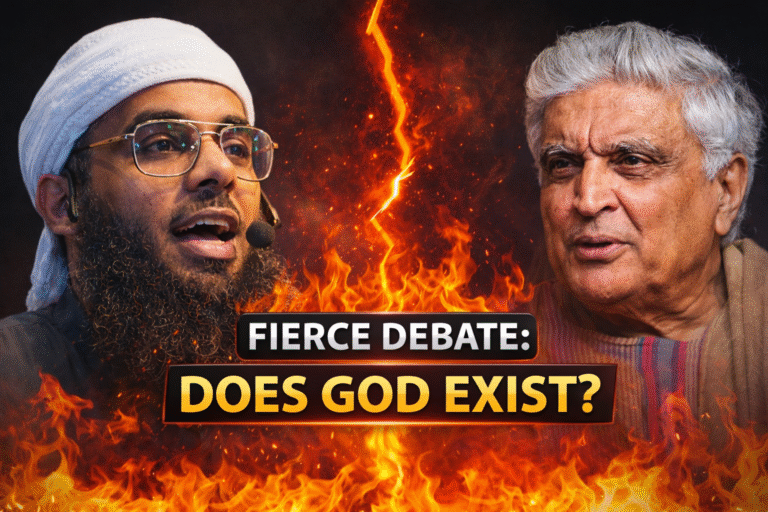
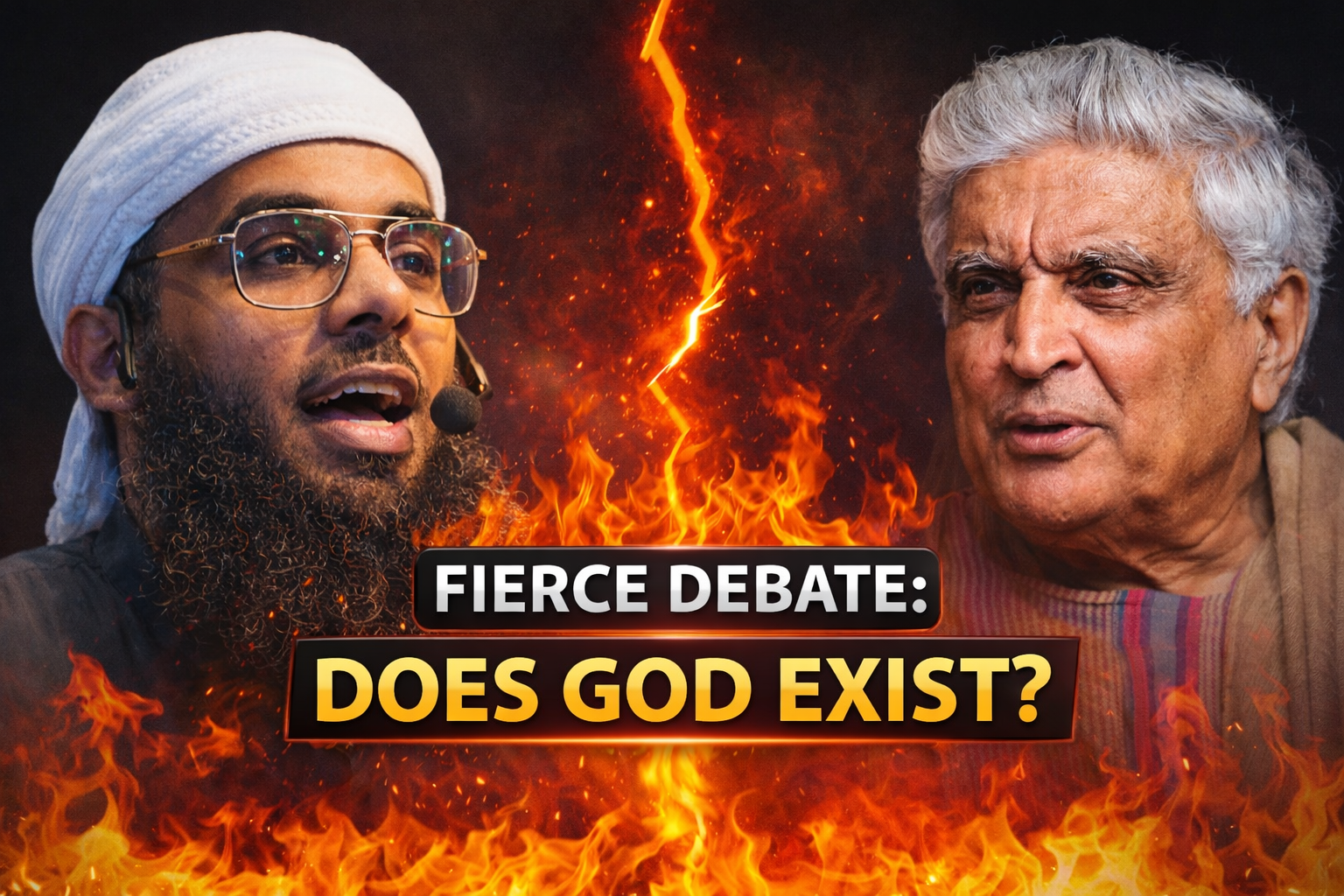
In recent years, intellectual discussions around religion, belief, and God have increasingly moved from academic circles to public forums, television screens, and social media platforms. One such discussion that captured massive attention in Pakistan involved the statements of Javed Akhtar and the responses delivered by Mufti Shumail Nadwi. The conversation, commonly referred to online as the Javed Akhtar vs Mufti Shumail Nadwi debate, did not take place as a single live event. Instead, it unfolded through speeches, interviews, video responses, and televised discussions that were widely shared and analyzed.
Because the topic touched sensitive areas of belief, God, faith, and religion, the discussion resonated deeply with audiences in Lahore, across Pakistan, and beyond. Moreover, the contrasting styles of both personalities added intensity to the public reaction. This article presents a detailed, structured account of what was said, how responses were delivered, and why the debate became so influential, while keeping the narrative accessible and human-friendly.
Background of the Debate
The Javed Akhtar vs Mufti Shumail Nadwi debate emerged during a period when cultural and ideological discussions between India and Pakistan were already under scrutiny. Javed Akhtar, known for his poetic expression and outspoken views, shared remarks on religion, God, and belief during public talks and interviews. These remarks quickly circulated on Pakistani social media channels, prompting reactions from religious scholars and commentators.
Soon after, Mufti Shumail Nadwi addressed these statements through recorded lectures, television appearances, and digital platforms. His responses directly engaged with the themes raised by Akhtar. Consequently, audiences began treating these exchanges as a structured debate, even though no formal debate stage existed.
What Javed Akhtar Said About God and Faith
Javed Akhtar’s remarks focused on belief systems, human responsibility, and the role of religion in society. He questioned blind faith and emphasized rational thinking. While speaking, he highlighted historical conflicts associated with religion and asked whether humanity often misuses faith for power and control.
Furthermore, Akhtar discussed the concept of God from a philosophical angle. He spoke about doubt, skepticism, and the human search for meaning. Instead of presenting a simple denial or affirmation, he framed belief as a personal journey influenced by upbringing, culture, and experience. These statements sparked intense reactions because many viewers interpreted them as a challenge to religious doctrine.
As his words spread online, selective clips amplified controversy. Short videos often removed broader context, which intensified emotional responses. Nevertheless, Akhtar consistently emphasized freedom of thought and the right to question ideas without fear.
Public Reaction in Pakistan
In Lahore and other major cities, audiences reacted strongly. Television anchors debated the remarks nightly. Social media users shared opinions, memes, and reaction videos. Religious scholars weighed in, while journalists analyzed the cultural implications. As a result, the Javed Akhtar vs Mufti Shumail Nadwi debate quickly became a trending topic across digital platforms.
Importantly, public reaction remained divided. Some praised Akhtar’s courage to question established norms. Others criticized him for challenging religious beliefs in a Muslim-majority country. This division set the stage for Mufti Shumail Nadwi’s detailed response.
How Mufti Shumail Nadwi Responded
Mufti Shumail Nadwi approached the situation calmly and methodically. Rather than engaging emotionally, he structured his response around Islamic theology, philosophy, and historical reasoning. He addressed the core ideas raised by Akhtar instead of attacking his personality.
First, Mufti Shumail explained the Islamic concept of God using logic and classical scholarship. He emphasized that belief in God is not blind acceptance but a conclusion reached through reflection, reason, and revelation. He also highlighted how Islamic thinkers historically encouraged questioning as a path toward deeper faith.
Next, he responded to skepticism by discussing the limits of human perception. According to him, absence of physical proof does not equate to non-existence. He used analogies from science and everyday life to explain how many accepted realities exist beyond direct observation.
Structure of the Counter-Arguments
The Javed Akhtar vs Mufti Shumail Nadwi debate gained depth because Mufti Shumail did not rely solely on religious texts. Instead, he combined philosophical reasoning with contemporary examples. He referenced order in the universe, moral accountability, and the human sense of justice as indicators of divine existence.
Additionally, he addressed the misuse of religion. He acknowledged that humans often distort faith for political or personal gain. However, he argued that misuse does not invalidate the existence of God. Rather, it reflects human failure, not divine absence.
This balanced tone increased his credibility among viewers. Even audiences unfamiliar with religious scholarship found his explanations relatable and structured.
Media Amplification and Digital Platforms
Television channels played a major role in sustaining the debate. Prime-time talk shows invited analysts to dissect both perspectives. Meanwhile, YouTube clips accumulated millions of views. TikTok and Facebook reels condensed arguments into short, impactful moments.
Because digital media thrives on engagement, headlines often framed the exchange as a dramatic confrontation. However, careful viewers noticed that Mufti Shumail consistently returned discussions to substance rather than spectacle.
In Lahore, media seminars and university discussions also referenced the debate. Students debated belief, doubt, and faith with renewed interest. Consequently, the discussion extended beyond entertainment and entered intellectual spaces.
Cultural and Social Impact
The debate influenced how public discourse around religion unfolded. Many young viewers felt encouraged to ask questions without fear. At the same time, religious scholars stressed the importance of respectful dialogue.
The Javed Akhtar vs Mufti Shumail Nadwi debate highlighted a growing demand for conversations that balance faith and reason. Instead of silencing opposing views, the exchange demonstrated how disagreement can remain civil and constructive.
Moreover, the debate reinforced the importance of context. Viewers learned how selective editing can change perception. This realization encouraged audiences to seek full speeches rather than relying on viral snippets.
Why the Debate Resonated So Strongly
Several factors contributed to the widespread attention. First, the personalities involved carried influence across borders. Second, the topic of God and belief touches deeply personal convictions. Third, social media algorithms amplified emotionally charged content.
Additionally, Pakistan’s evolving media landscape played a role. Audiences increasingly consume debates online rather than through traditional channels. This shift allowed the discussion to reach younger demographics rapidly.
Final Analysis of the Debate
When reviewing the Javed Akhtar vs Mufti Shumail Nadwi debate, it becomes clear that both sides represented different approaches to understanding existence. Akhtar emphasized questioning and skepticism, while Mufti Shumail emphasized reasoned belief supported by theology and philosophy.
However, the structured nature of Mufti Shumail’s arguments, combined with his calm delivery, resonated more strongly with audiences seeking clarity rather than confrontation. His explanations addressed doubts directly and provided intellectual grounding.
Conclusion: Where the Debate Ultimately Landed
By the end of the public discourse, the dominant takeaway for many viewers was clear. While questioning and reflection remain important, Mufti Shumail Nadwi’s arguments presented a compelling case that belief in God stands on rational, philosophical, and moral foundations.
As the debate progressed, his explanations reinforced the idea that God’s existence does not depend on emotional assertion but on thoughtful reasoning. Consequently, in the eyes of many viewers, Mufti Shumail Nadwi emerged stronger, successfully articulating that God really exists through logic, faith, and historical understanding.
FAQs
What is the Javed Akhtar vs Mufti Shumail Nadwi debate about?
It focuses on discussions around God, faith, belief, and skepticism based on public statements and responses.
Was there a live debate between Javed Akhtar and Mufti Shumail Nadwi?
No, the debate unfolded through separate speeches, interviews, and video responses.
Why did the debate gain so much attention in Pakistan?
Because it involved religion, belief, and prominent personalities, which deeply resonate with audiences.
What position did Javed Akhtar take on faith?
He emphasized questioning, skepticism, and personal interpretation of belief.
How did Mufti Shumail Nadwi respond?
He used Islamic theology, philosophy, and logical reasoning to address the points raised.
Did Mufti Shumail Nadwi criticize Javed Akhtar personally?
No, he focused on ideas rather than personal attacks.
Which side convinced more viewers?
Many viewers felt Mufti Shumail Nadwi’s structured arguments were more convincing.
Why is the debate still discussed today?
Because it represents a broader conversation about faith and reason in modern society.
Did the debate encourage open discussion?
Yes, it encouraged respectful dialogue and critical thinking.
What was the final takeaway of the debate?
The debate reinforced that belief in God can coexist with reason, and many concluded that God truly exists.