By ChalPakistan, Lahore
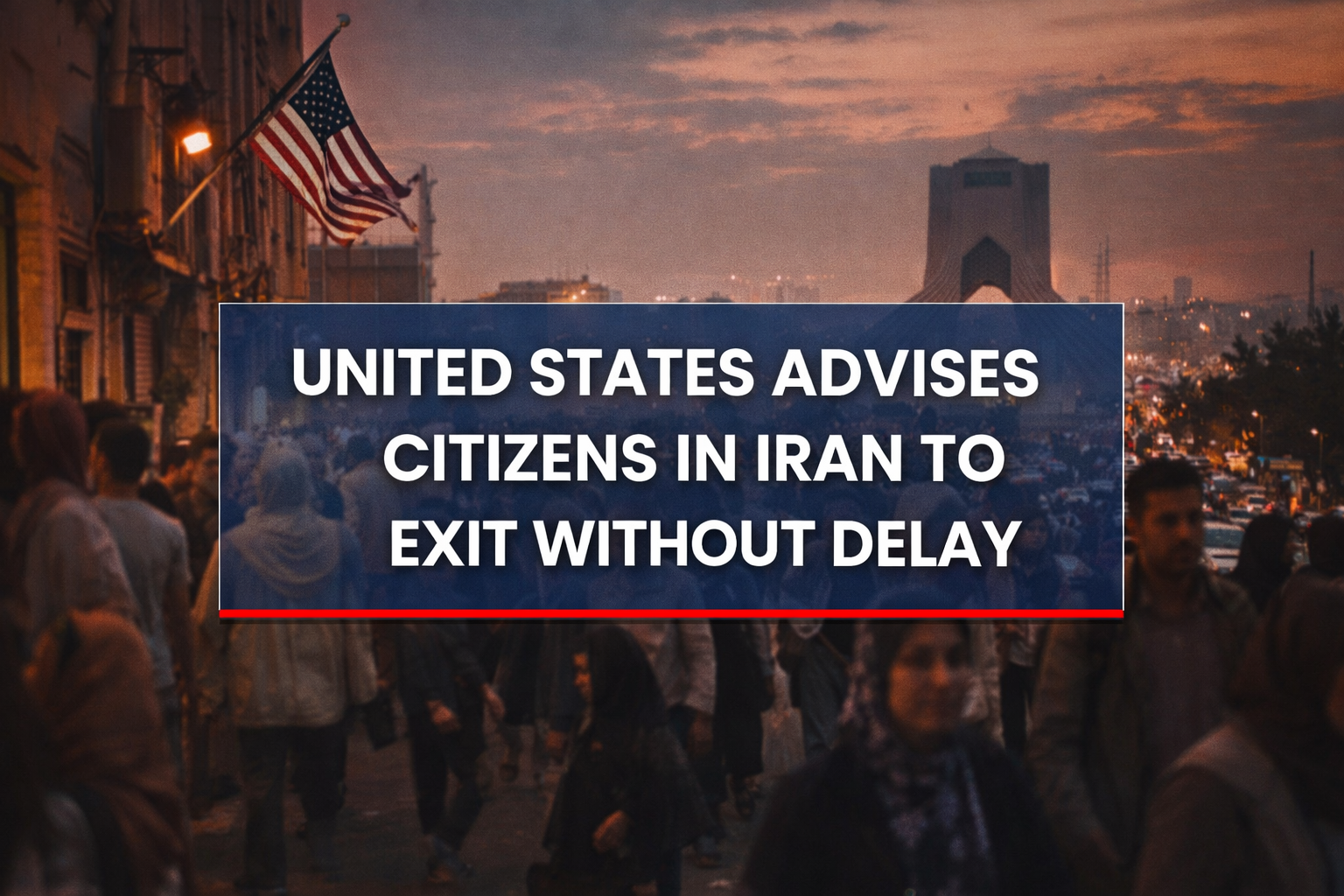
The United States issued an urgent advisory that immediately drew global attention as Washington warned its citizens inside Iran to leave the country without delay. The announcement reflects rising diplomatic strain, regional uncertainty, and renewed concern over the safety of foreign nationals amid evolving geopolitical tensions in the Middle East.
Breaking context behind the advisory
The advisory came as U.S. officials reassessed security conditions in Iran following recent regional developments. American authorities cited limited consular access, heightened political friction, and unpredictable security dynamics as key factors behind the decision. The warning urges U.S. citizens to depart Iran through available commercial routes or safe land exits while options remain open.
Officials stressed that the advisory does not stem from a single incident but rather from a broader assessment of risks linked to US Iran Conflicts. The U.S. State Department emphasized that American citizens face unique challenges in Iran due to the absence of diplomatic relations between the two countries.
Who issued the warning and who it affects
The U.S. State Department released the advisory through official channels, including its travel and security alerts. The warning applies to all U.S. citizens currently residing in or traveling through Iran, regardless of purpose or duration of stay.
The advisory clearly states that US warns citizens to leave Iran immediately because the U.S. government cannot provide routine or emergency consular services in the country. American interests in Iran operate through third-party arrangements, which severely limit response capacity during emergencies.
What prompted the renewed urgency
Several regional developments contributed to the advisory’s timing. Analysts point to escalating rhetoric, military movements, and unresolved diplomatic disputes as contributing factors. While officials avoided detailing classified intelligence, they confirmed that conditions on the ground could deteriorate rapidly.
The US Iran Conflicts framework continues to shape bilateral relations, influencing security assessments and travel guidance. U.S. authorities believe that Americans may face increased scrutiny or detention risks during periods of heightened tension.
When and where the advisory applies
The advisory took effect immediately upon release and remains valid until further notice. It applies nationwide across Iran, including major cities and border regions. Officials advised travelers to monitor local developments closely and avoid high-risk areas.
Authorities urged citizens to plan departures carefully, considering border crossings into neighboring countries where commercial flights may not operate consistently.
Why Iran poses unique risks for U.S. citizens
Iran’s legal and political environment creates specific risks for American nationals. Iranian authorities do not recognize dual nationality and may treat dual U.S.-Iranian citizens solely as Iranian nationals. This practice limits access to consular support and legal protections.
The advisory underscores that US warns citizens to leave Iran immediately because detention, questioning, or travel restrictions may occur without warning. Past cases illustrate how rapidly circumstances can change.
Historical background of US Iran Conflicts
Tensions between Washington and Tehran span decades, rooted in political disagreements, sanctions, and regional rivalries. These US Iran Conflicts have periodically escalated, affecting diplomatic relations and citizen safety.
Previous travel advisories often coincided with regional crises, sanctions enforcement, or military incidents. Analysts view the latest warning as part of a recurring pattern tied to broader geopolitical shifts.
Travel options and exit guidance
The U.S. government advised citizens to use existing commercial flights where available. For those unable to secure air travel, officials recommended identifying secure land routes through neighboring countries, while exercising caution.
The advisory instructs travelers to maintain low profiles, avoid demonstrations, and limit public exposure. Officials also encouraged citizens to share travel plans with trusted contacts.
Communication challenges for U.S. citizens
Due to the lack of diplomatic relations, communication channels remain limited. The U.S. State Department urged citizens to enroll in traveler information programs to receive updates, although access constraints persist.
The warning reiterates that US warns citizens to leave Iran immediately because emergency assistance may not be available if conditions worsen.
Regional implications of the advisory
The advisory reflects broader concerns about stability in the Middle East. Regional analysts suggest that travel warnings often signal diplomatic recalibration or anticipation of volatility.
Neighboring countries remain alert to potential spillover effects. Airlines and travel agencies monitor advisories closely, as such warnings influence passenger demand and routing decisions.
Iranian response and official messaging
Iranian officials have not issued a detailed public response to the advisory. Historically, Tehran has criticized similar warnings as politically motivated. However, local authorities continue to emphasize national security and internal stability.
Observers note that divergent narratives often accompany US Iran Conflicts, complicating public understanding and diplomatic messaging.
Impact on dual nationals and families
Dual nationals face complex decisions when advisories emerge. Families with ties to both countries must weigh personal obligations against security considerations.
The advisory advises dual citizens to exercise heightened caution, recognizing that exit options may differ based on citizenship status.
Business and academic implications
The warning affects businesses, researchers, and academics operating in Iran. Companies may suspend travel plans or relocate personnel. Academic exchanges face disruptions, particularly for short-term programs.
Institutions monitor US Iran Conflicts closely to assess operational risks and compliance obligations.
Media and public reaction
International media outlets widely reported the advisory, highlighting its urgency and implications. Public reaction among diaspora communities reflects concern and uncertainty.
Social media discussions emphasize safety planning and information sharing, underscoring the advisory’s immediate relevance.
Legal and security considerations
U.S. officials reminded citizens that Iranian laws differ significantly from U.S. standards. Activities considered routine elsewhere may attract scrutiny in Iran.
The advisory highlights that US warns citizens to leave Iran immediately due to legal uncertainties and enforcement practices that may affect foreigners disproportionately.
Comparison with previous advisories
Similar warnings emerged during earlier periods of tension. Analysts compare language and timing to assess severity.
The current advisory uses direct wording, signaling a high level of concern compared to routine travel cautions.
Role of third-party diplomatic channels
Switzerland traditionally represents U.S. interests in Iran. However, capacity remains limited. Third-party channels provide basic assistance but cannot replace full diplomatic services.
This limitation reinforces why US warns citizens to leave Iran immediately rather than rely on in-country support.
Regional security outlook
Experts remain divided on near-term developments. Some foresee diplomatic engagement, while others anticipate continued strain.
Travel advisories often reflect worst-case planning rather than immediate threats, yet officials stress preparedness.
Guidance for families and dependents
The advisory encourages families to coordinate departures together when possible. Parents should prioritize children’s safety and documentation.
Officials advise maintaining copies of travel documents and emergency contacts.
Monitoring updates and official sources
The U.S. government committed to updating guidance as conditions evolve. Citizens should rely on official channels rather than unverified reports.
Accurate information becomes especially important during US Iran Conflicts, when misinformation can spread quickly.
Broader geopolitical context
The advisory aligns with shifting alliances, regional negotiations, and security calculations. Observers view it as part of a broader diplomatic posture.
Travel warnings often intersect with sanctions policy and regional strategy.
Implications for regional travel
Airlines may adjust routes, while neighboring countries may experience increased transit traffic. Border authorities prepare for potential increases in cross-border movement.
The advisory underscores interconnectedness within the region.
Conclusion and outlook
The U.S. advisory urging citizens to exit Iran without delay reflects heightened caution amid ongoing tensions. By emphasizing limited consular access and unpredictable conditions, officials aim to reduce risks to American nationals.
As US Iran Conflicts continue to influence regional dynamics, travelers must remain informed and proactive. The advisory serves as a reminder that geopolitical developments directly affect individual safety and mobility.
Read Trusted Stories, Breaking News & In-Depth Blogs – Start Exploring ChalPakistan
Frequently Asked Questions
Why did the United States issue this advisory now?
The advisory reflects reassessed security conditions and ongoing regional tensions.
Who should follow this warning?
All U.S. citizens currently in Iran should take note.
Does the advisory mean conflict is imminent?
Officials did not cite an immediate incident but urged caution.
Can the U.S. help citizens inside Iran?
Consular services remain extremely limited.
What exit options are available?
Commercial flights and certain land routes may remain open.
Are dual nationals affected differently?
Yes, Iran does not recognize dual nationality.
How long will the advisory remain active?
It stays in effect until conditions change.
Should travelers avoid all areas of Iran?
The warning applies nationwide.
Where can updates be found?
Through official U.S. government travel alerts.
How do US Iran Conflicts influence travel advice?
They shape security assessments and diplomatic capacity.