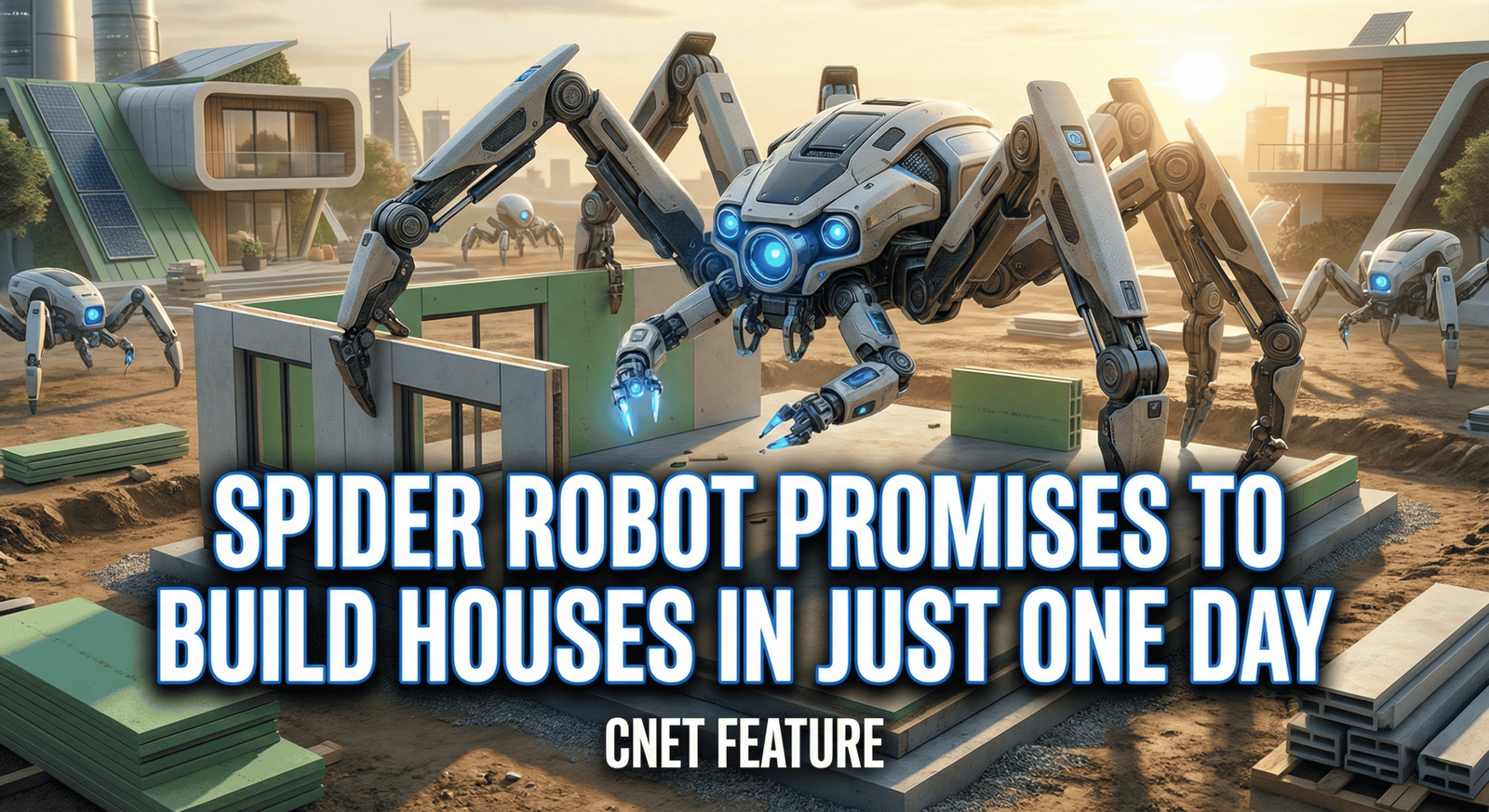
he construction world is changing faster than ever, and the arrival of a spider robot has captured global attention. This innovative machine promises to build houses in just one day, a concept that once belonged only to science fiction films. Today, this idea feels real, practical, and achievable. At Chal Pakistan, we closely observe how advanced technology transforms industries, reshapes cities, and improves everyday life. From Hollywood-style imagination to real-world application, this spider robot stands as a symbol of what the future holds.
Moreover, Lahore, Pakistan, continues to grow rapidly, creating an urgent demand for faster, smarter, and more affordable housing solutions. Traditional construction methods struggle to keep pace with urban expansion. Therefore, revolutionary tools like spider robots bring hope, efficiency, and sustainability to the construction sector. This article explores how this groundbreaking invention works, why it matters, and how advanced technology drives a new era of housing.
The Inspiration Behind the Spider Robot
Innovation often begins with inspiration drawn from nature. Engineers studied spiders because spiders demonstrate balance, flexibility, and precision. As a result, designers created a robot that mimics spider-like movement while maintaining structural stability. Each robotic leg works independently, allowing smooth movement across uneven ground.
Furthermore, filmmakers and sci-fi storytellers influenced this creation. For decades, movies showcased intelligent machines constructing cities overnight. Now, advanced technology turns cinematic dreams into practical solutions. Chal Pakistan recognizes how storytelling inspires real innovation, especially when creative ideas meet engineering excellence.
How the Spider Robot Works
The spider robot uses robotic arms and legs equipped with precision sensors. These sensors scan the ground, analyze terrain, and adjust movements in real time. Instead of relying on human labor for every step, the robot follows digital blueprints uploaded into its system.
Additionally, the robot uses 3D construction printing methods. It layers concrete materials efficiently, ensuring durability and structural integrity. Because it completes tasks simultaneously, it saves hours, resources, and labor costs. This process highlights how advanced technology optimizes performance without sacrificing quality.
Building a House in Just One Day
Speed remains the most astonishing feature of the spider robot. Traditional houses take months to complete. However, this robot completes structural construction within twenty-four hours. It handles foundation layout, wall construction, and framework assembly seamlessly.
Consequently, housing projects accelerate dramatically. Families receive homes faster, developers reduce overhead costs, and cities manage population growth more effectively. Chal Pakistan believes such innovations redefine construction timelines and expectations.
Impact on Lahore’s Growing Housing Needs
Lahore stands among Pakistan’s fastest-growing cities. Population growth creates pressure on housing infrastructure. Conventional methods cannot meet demand efficiently. Spider robots offer a scalable solution that fits urban environments.
Moreover, advanced technology allows customization. Builders can modify designs quickly, adapt to plot sizes, and reduce waste. This flexibility suits Lahore’s diverse neighborhoods, from dense urban zones to expanding suburban areas.
Sustainability and Environmental Benefits
Environmental responsibility plays a critical role in modern construction. Spider robots reduce material waste by calculating exact quantities. They also consume less energy compared to large construction crews and machinery.
In addition, these robots support eco-friendly building materials. As sustainability becomes a global priority, advanced technology ensures development does not harm the environment. Chal Pakistan promotes awareness of sustainable innovation across creative and industrial sectors.
Safety Improvements Through Robotics
Construction remains one of the most hazardous industries. Spider robots minimize human exposure to risky environments. Workers oversee operations remotely, reducing accidents and injuries.
Furthermore, robotic precision eliminates common human errors. Consistent performance enhances building safety standards. This safety-first approach demonstrates how advanced technology protects lives while improving efficiency.
Economic Advantages for Developers
Cost efficiency drives adoption of new tools. Spider robots reduce labor costs, minimize delays, and increase output. Developers complete more projects in less time, improving profitability.
Additionally, faster construction attracts investors. Lahore’s real estate market benefits from this technological shift. Chal Pakistan highlights how innovation strengthens economic growth through smarter production methods powered by advanced technology.
Challenges and Limitations
Despite impressive capabilities, spider robots face challenges. High initial investment costs may discourage smaller builders. Technical expertise remains necessary for operation and maintenance.
However, technology adoption always begins with early challenges. Over time, costs decrease, accessibility improves, and training expands. History shows that advanced technology eventually becomes mainstream.
Role of Artificial Intelligence in Construction
Artificial intelligence enhances spider robot functionality. AI algorithms analyze data, predict construction outcomes, and adjust strategies in real time. This intelligent decision-making improves accuracy and reduces errors.
Moreover, AI integration allows continuous learning. Each project improves the robot’s efficiency. Chal Pakistan recognizes AI as a powerful companion to creativity and innovation, especially when paired with advanced technology.
Influence of Film and Media on Innovation
Films often shape public perception of technology. Sci-fi movies inspired generations of engineers to push boundaries. Spider robots reflect this influence by bringing cinematic visions into reality.
As an expert film industry copywriter, I observe how storytelling fuels ambition. Creative narratives encourage innovation. Today, advanced technology proves that imagination and engineering thrive together.
Training and Workforce Transformation
Robotic construction changes workforce dynamics. Instead of manual labor, workers shift toward technical roles. Training programs focus on robotics, programming, and maintenance.
This transformation creates new job opportunities. Skilled professionals manage operations, ensuring sustainable employment growth. Chal Pakistan supports workforce evolution through education aligned with advanced technology trends.
Future of Housing Construction
The spider robot represents only the beginning. Future developments may include fully autonomous construction systems, smart materials, and AI-managed urban planning.
As cities expand, construction must adapt quickly. Lahore stands ready to embrace innovation. Advanced technology promises smarter, faster, and more sustainable housing solutions.
Global Interest and Investment
International investors monitor robotic construction closely. Countries facing housing shortages explore similar solutions. Pakistan’s adoption positions Lahore as a regional innovation hub.
Furthermore, collaboration between engineers, designers, and storytellers accelerates progress. Chal Pakistan highlights global trends to inspire local innovation driven by advanced technology.
Social Impact on Communities
Faster housing improves quality of life. Families gain stability, safety, and comfort. Communities grow stronger when housing becomes accessible.
Spider robots help reduce homelessness and informal settlements. Through responsible implementation, advanced technology contributes positively to society.
Chal Pakistan’s Vision for Innovation
Chal Pakistan promotes creativity, progress, and technological awareness. By highlighting innovations like spider robots, we encourage forward-thinking mindsets.
We believe innovation thrives when imagination meets execution. Advanced technology bridges that gap, turning bold ideas into practical solutions.
Conclusion
The spider robot that builds houses in one day signals a revolutionary shift in construction. It blends inspiration, engineering, and efficiency into one powerful solution. Lahore, Pakistan, stands at the edge of transformation as urban demands increase.
At Chal Pakistan, we celebrate innovation that improves lives and shapes the future. As advanced technology continues evolving, the line between imagination and reality grows thinner. The future of housing has arrived, and it walks on eight robotic legs.
FAQs
What is a spider robot in construction?
A spider robot is a multi-legged robotic machine designed to construct buildings using automated systems and digital blueprints.
How does advanced technology help build houses faster?
Advanced technology automates processes, improves precision, and reduces manual labor, allowing faster construction timelines.
Can spider robots work in urban areas like Lahore?
Yes, spider robots adapt to uneven terrain and limited spaces, making them suitable for urban environments.
Are houses built by robots safe and durable?
Yes, robotic construction ensures consistent quality and structural strength through precise execution.
Does robotic construction reduce costs?
Yes, it lowers labor expenses, minimizes material waste, and shortens project duration.
What role does AI play in spider robots?
AI helps analyze data, optimize construction processes, and improve accuracy during building.
Will robots replace construction workers?
No, robots transform roles by creating technical and supervisory job opportunities.
Is robotic construction environmentally friendly?
Yes, it supports sustainability by reducing waste and energy consumption.
How soon can this technology become common in Pakistan?
Adoption may increase within the next decade as costs decrease and awareness grows.
Why does Chal Pakistan focus on advanced technology?
Chal Pakistan promotes innovation that combines creativity, storytelling, and advanced technology to shape a better future.