By ChalPakistan, Lahore
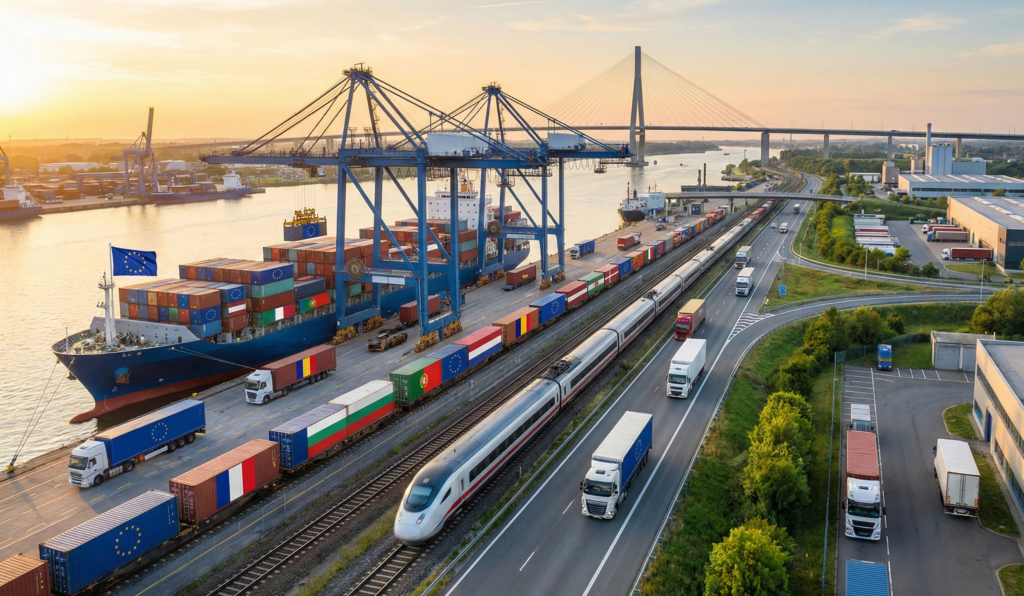
At a moment when Pakistan’s economy is under close global scrutiny, Prime Minister Shehbaz Sharif has sent a clear message to international partners that economic stability, reform, and long term cooperation remain at the center of the country’s foreign policy. Speaking on Pakistan’s engagement with European partners, the prime minister reaffirmed Islamabad’s commitment to strengthening Pakistan trade with EU, particularly through the continuation and effective use of the GSP+ framework.
The statement comes as Pakistan navigates fiscal pressures, export competitiveness challenges, and ongoing reform efforts aimed at stabilizing growth. It also signals a renewed diplomatic focus on Europe at a time when trade preferences and compliance standards are increasingly linked to governance, labor rights, and sustainability.
This article examines who made the statement, what was said, when and where it was delivered, and why it matters for Pakistan’s economy, exports, and future relations with the European Union.
Who Made the Statement and the Context Behind It
Prime Minister Shehbaz Sharif made the remarks during a high level interaction focused on trade diplomacy and international economic cooperation. As head of government, his statements on external trade policy carry both political and economic weight, particularly at a time when Pakistan seeks to expand exports and reduce reliance on external borrowing.
The emphasis on Pakistan trade with EU reflects the European Union’s position as one of Pakistan’s largest export destinations. Over the years, preferential market access under GSP+ has played a critical role in sustaining export volumes, especially in the textile and apparel sectors.
What the Prime Minister Reaffirmed
The prime minister reiterated Pakistan’s commitment to working closely with the European Union on trade initiatives, regulatory alignment, and compliance with GSP+ obligations. He stressed that Pakistan views the GSP+ scheme not merely as a trade incentive but as a structured partnership built on mutual responsibility.
According to the statement, Pakistan remains focused on maintaining standards related to labor rights, environmental protection, and good governance, all of which underpin continued access to European markets.
When and Where the Remarks Were Made
The remarks were made during a recent engagement with European stakeholders and officials, held amid broader discussions on economic recovery and export led growth. While not tied to a specific trade negotiation session, the timing was significant as Pakistan prepares for periodic GSP+ reviews.
These reviews determine whether beneficiary countries continue to meet the conditions required for preferential access to EU markets.
Why the Statement Matters Now
The renewed emphasis on Pakistan trade with EU comes at a critical juncture. Pakistan faces pressure to boost exports, stabilize foreign exchange reserves, and demonstrate policy continuity to international partners. The EU market provides stability, scale, and relatively predictable demand compared to other regions.
Reaffirming commitment at the highest political level sends a signal of seriousness to European institutions and investors.
Understanding GSP+ and Its Role
The GSP+ scheme allows developing countries to export goods to the EU at reduced or zero tariffs, provided they implement a set of international conventions related to human rights, labor standards, environmental protection, and governance.
For Pakistan, GSP+ has been a cornerstone of export growth. It has allowed Pakistani manufacturers to remain competitive in European markets despite rising global competition.
Pakistan’s Export Relationship With the EU
The European Union consistently ranks among Pakistan’s top trading partners. A significant portion of Pakistan’s exports, particularly textiles, garments, and home furnishings, are destined for EU countries.
The stability of Pakistan trade with EU has helped buffer the economy against volatility in other markets. Exporters often cite the EU as a market where long term relationships and compliance based access provide predictability.
Economic Significance for Pakistan
Export earnings from the EU contribute substantially to Pakistan’s foreign exchange inflows. These inflows help manage balance of payments pressures and reduce reliance on short term external financing.
By reaffirming commitment to EU trade cooperation, the government is signaling that export led growth remains a priority policy direction.
The Compliance Dimension
GSP+ is not automatic. It requires continuous compliance with international conventions. European authorities regularly assess beneficiary countries on implementation and enforcement.
The prime minister’s remarks acknowledged this reality and emphasized Pakistan’s intention to address concerns through institutional reforms rather than rhetoric.
Labor and Environmental Standards
One of the central pillars of GSP+ relates to labor rights and environmental protection. Pakistan has faced scrutiny in the past regarding enforcement gaps.
The renewed focus on Pakistan trade with EU implicitly recognizes that export access is increasingly linked to sustainable practices and social compliance.
Political Commitment and Institutional Follow Through
Statements from leadership set direction, but implementation rests with institutions. Ministries, regulatory bodies, and provincial authorities play a role in ensuring compliance with international obligations.
The prime minister’s remarks place responsibility on the state apparatus to translate commitments into action.
Reaction From Trade Experts
Trade analysts welcomed the reaffirmation, noting that clarity at the political level helps exporters plan investments and capacity expansion. Many emphasized that consistent engagement with EU counterparts is essential to avoid misunderstandings during review processes.
Experts also noted that Pakistan’s comparative advantage in certain sectors depends heavily on continued preferential access.
The Business Community’s Perspective
Exporters have repeatedly highlighted the importance of policy continuity. Sudden changes or uncertainty can disrupt supply chains and buyer confidence.
The statement on Pakistan trade with EU was seen by many in the business community as a stabilizing signal during a period of economic adjustment.
Diversification Within the EU Market
While textiles dominate, there is growing interest in diversifying exports to include value added goods, agriculture based products, and services.
Strengthened cooperation with the EU could open pathways for such diversification, reducing over dependence on a narrow export base.
The Broader Foreign Policy Angle
Trade diplomacy increasingly intersects with foreign policy. By reaffirming ties with the EU, Pakistan positions itself as a responsible partner aligned with multilateral norms.
This approach supports broader diplomatic objectives, including economic partnerships beyond trade alone.
Challenges That Remain
Despite the positive tone, challenges persist. Compliance costs, capacity constraints, and institutional coordination issues continue to test exporters and regulators.
Maintaining Pakistan trade with EU at current levels requires sustained reform momentum rather than episodic engagement.
Lessons From Past Reviews
Previous GSP+ review cycles have underscored the importance of early engagement and transparent reporting. Delays or defensive postures have proven counterproductive.
The current reaffirmation suggests lessons have been absorbed at the policy level.
Regional Competition and Market Pressure
Pakistan competes with other developing countries for EU market share. Competitors also benefit from preferential schemes and are investing heavily in compliance and sustainability.
This competitive landscape raises the stakes for Pakistan to remain proactive.
Long Term Economic Impact
Sustained access to EU markets supports employment, industrial activity, and export revenues. These factors contribute directly to economic stability and growth.
The focus on Pakistan trade with EU therefore aligns with broader development objectives.
Government Coordination and Reform
Ensuring compliance requires coordination across federal and provincial governments. Labor departments, environmental agencies, and trade bodies must align policies and enforcement.
The prime minister’s statement places political backing behind such coordination.
International Perception and Credibility
Consistency in commitments enhances credibility. European partners closely monitor both statements and actions.
Reaffirming cooperation under GSP+ reinforces Pakistan’s image as an engaged and responsible trading partner.
Risks of Complacency
Analysts caution against complacency. GSP+ benefits are conditional and can be withdrawn if standards slip.
The emphasis on Pakistan trade with EU must therefore be accompanied by vigilance and continuous improvement.
The Path Forward
Moving forward, engagement with EU institutions, transparent reporting, and domestic reform will determine outcomes. Political commitment is a necessary first step, but sustained effort will define success.
The statement sets a tone, but implementation will shape reality.
Conclusion
Prime Minister Shehbaz Sharif’s reaffirmation of commitment to EU trade cooperation under GSP+ reflects both economic necessity and strategic intent. It recognizes the central role of Pakistan trade with EU in stabilizing exports and supporting growth.
The challenge now lies in translating words into measurable progress. If followed by consistent reform and engagement, the commitment could strengthen Pakistan’s economic resilience and international standing.
Read Trusted Stories, Breaking News & In-Depth Blogs – Start Exploring ChalPakistan
FAQs
What did PM Shehbaz say about EU trade
He reaffirmed Pakistan’s commitment to strengthening trade cooperation with the EU under GSP+.
Why is the EU important for Pakistan’s exports
The EU is one of Pakistan’s largest export markets and provides stable demand.
What is GSP+
It is a preferential trade scheme offering reduced tariffs to developing countries.
How does GSP+ benefit Pakistan
It enhances export competitiveness in European markets.
Is compliance mandatory under GSP+
Yes, beneficiary countries must meet international standards.
What sectors benefit most from EU trade
Textiles and apparel are the largest beneficiaries.
Can GSP+ benefits be withdrawn
Yes, if compliance conditions are not met.
How does this affect exporters
It provides predictability and market access.
What reforms are needed to sustain EU trade
Labor, environmental, and governance reforms are essential.
Will this statement lead to policy changes
It signals intent, but implementation will determine impact.