By ChalPakistan, Lahore
A quiet unease has settled across airports and border crossings as Pakistan moves to protect public health without causing alarm. Within hours of new regional health advisories, authorities ordered screening measures for incoming travellers to prevent any potential spread of a deadly virus. The decision reflects urgency, caution, and a clear message that preparedness matters when lives stand at risk.
Pakistan has mandated enhanced health checks for travellers entering the country amid concerns linked to the Nipah virus. Officials confirmed the move on Wednesday following reports of fresh cases in parts of South Asia. Health agencies stress that the step aims to detect symptoms early, limit exposure, and reassure the public during a period of heightened regional vigilance.
The government took this action after consultations between federal health authorities, airport officials, and provincial departments. The directive applies to major international airports, land borders, and selected seaports. Officials clarified that screening focuses on passengers arriving from regions with reported Nipah virus activity.
This article explains who ordered the screening, what the measures include, when they take effect, where they apply, why authorities consider them necessary, and how they affect travellers. It also places the decision in regional context and outlines what the public should know next.
Immediate context and why the move matters
Health officials describe the decision as preventive rather than reactive. Pakistan has not confirmed any local case linked to the virus. However, experts warn that delays in detection can carry serious consequences. Nipah virus infections can progress rapidly, and the virus carries a high fatality rate in documented outbreaks.
The government chose early action to protect communities, healthcare workers, and transport hubs. By strengthening Nipah virus traveller screening at entry points, officials aim to spot warning signs before travellers move freely within the country.
The decision aligns with international public health practice, especially during periods of cross-border disease activity. Authorities emphasise calm, cooperation, and adherence to guidance.
What officials ordered and how screening works
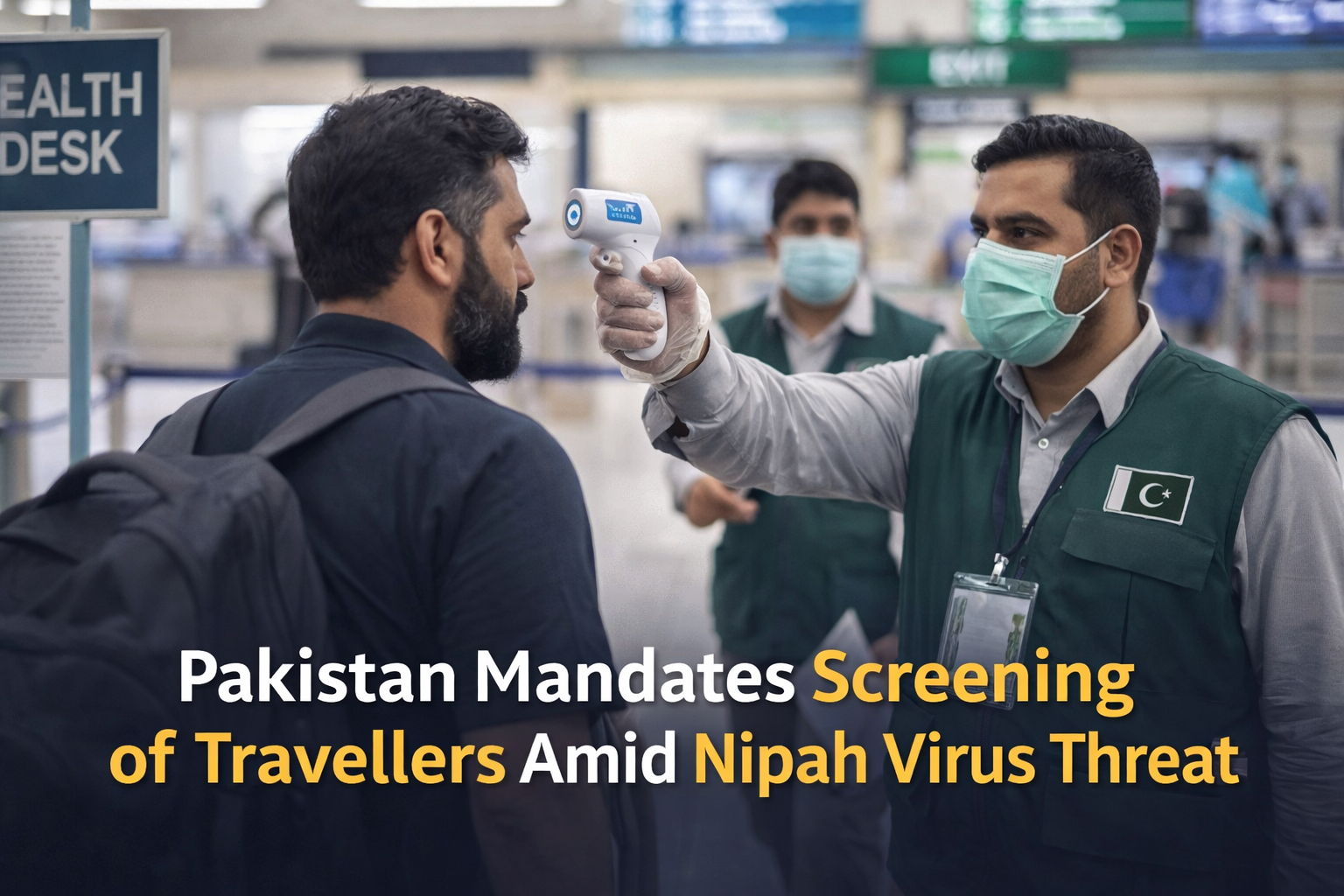
The Ministry of National Health Services issued instructions to airport health units and border medical teams to begin screening protocols immediately. These protocols include temperature checks, visual assessments, and health questionnaires for selected passengers.
Screening teams now ask travellers about recent symptoms, travel history, and potential exposure. Medical staff isolate and assess anyone who shows fever, respiratory distress, or neurological signs. Authorities then refer suspected cases to designated hospitals for further testing and observation.
Officials confirm that Nipah virus traveller screening relies on early identification rather than mass testing. The virus does not spread easily without close contact, which allows targeted measures to work effectively.
Where the screening applies across Pakistan
Authorities confirmed the rollout at major international airports, including Karachi, Lahore, and Islamabad. Land borders with Iran and Afghanistan also follow updated guidance due to cross-regional movement. Selected seaports apply the same protocols for arriving crews.
Health departments coordinate with immigration and airline staff to manage passenger flow. Officials aim to avoid delays while maintaining safety standards.
The government expects screening teams to adapt procedures based on passenger volume and evolving risk assessments. Officials stress that the system remains flexible and responsive.
When the screening began and how long it will last
Pakistan implemented the measures immediately after issuing the advisory. Officials did not announce an end date, citing the evolving nature of regional health alerts.
Health authorities review the situation daily and plan to adjust protocols based on guidance from international health bodies. The government may relax or tighten screening depending on case trends in neighboring regions.
Officials urge travellers to stay informed through official channels and comply with health checks during travel.
Who leads the response and coordination
The federal health ministry leads the response in coordination with provincial departments, airport authorities, and border agencies. The National Institute of Health provides technical guidance and risk assessment.
Provincial health secretaries oversee on-ground implementation. Airport medical units manage screening operations, isolation procedures, and referrals.
The government also coordinates with airlines to ensure passengers receive clear information before arrival. Officials stress transparency and consistency across entry points.
Understanding the Nipah virus and why it concerns health experts
Nipah virus is a zoonotic pathogen that spreads from animals to humans. Fruit bats act as natural hosts, and infections have occurred through contaminated food or close contact with infected individuals.
Symptoms range from fever and headache to severe respiratory illness and encephalitis. The disease can prove fatal in a significant percentage of cases. There is no specific antiviral treatment, which increases the importance of early detection and supportive care.
Health experts note that outbreaks often remain limited when authorities act quickly. Screening, isolation, and contact tracing reduce the risk of wider spread.
Regional developments that prompted caution
Recent reports from South Asia highlighted new cases and fatalities linked to the virus. Health agencies across the region increased surveillance and public messaging.
Pakistan’s proximity and travel links raised concern among policymakers. Officials decided to act before any confirmed local case appeared. This approach mirrors past responses to emerging health threats.
By strengthening Nipah virus traveller screening, authorities hope to maintain public confidence while safeguarding health systems.
Impact on travellers and what to expect at entry points
Travellers entering Pakistan should expect brief health checks. Officials advise passengers to cooperate, answer questions honestly, and report symptoms.
Authorities stress that screening does not restrict travel for healthy individuals. Instead, it ensures quick assessment when signs appear.
Airlines may share health advisories during flights. Passengers with recent exposure or symptoms should seek medical advice before traveling.
How hospitals prepare for possible cases
Designated hospitals across provinces remain on alert. Isolation wards, trained staff, and infection control protocols stand ready.
The health ministry has reviewed emergency response plans and ensured supplies of protective equipment. Officials also updated referral pathways between airports and hospitals.
Healthcare workers receive refresher training on recognizing symptoms and managing suspected cases safely.
Public communication and avoiding panic
Officials emphasize calm and factual communication. They discourage rumors and misinformation, which can spread faster than viruses.
The government urges citizens to rely on verified updates from health authorities. Media outlets also carry responsibility to report accurately.
Authorities stress that Nipah virus traveller screening does not signal an outbreak in Pakistan. It reflects preparedness and responsible governance.
Lessons from past outbreaks and global health practice
Countries that acted early during previous outbreaks often contained spread more effectively. Screening at borders serves as one layer in a broader strategy that includes surveillance, healthcare readiness, and public awareness.
Pakistan has applied similar measures during past regional health alerts. Each response improved coordination and capacity.
Health experts say vigilance remains essential even when risk appears low.
Economic and travel considerations
Authorities aim to balance health protection with economic stability. Travel and trade continue under the new measures.
Officials do not expect major disruptions. Screening processes add minimal time for most passengers.
The government continues to monitor potential impacts and stands ready to adjust protocols.
What experts say about the current risk level
Public health experts describe the risk to Pakistan as low but real. They stress that early detection makes a critical difference.
Experts support targeted screening rather than blanket restrictions. They note that informed travelers and responsive health systems reduce transmission risk significantly.
By reinforcing Nipah virus traveller screening, Pakistan aligns with expert recommendations.
Cooperation with international health bodies
Pakistan maintains communication with international health organizations for updates and technical advice. Authorities share surveillance data and receive guidance on best practices.
This cooperation ensures that screening measures reflect global standards and scientific evidence.
Responsibilities of travellers and the public
Health officials call on travellers to monitor their health after arrival. Anyone experiencing symptoms should seek medical care promptly and disclose travel history.
The public should practice basic hygiene and remain informed. Authorities stress that community awareness supports early response.
Looking ahead and continued vigilance
The government plans to review screening measures regularly. Officials may expand or narrow protocols based on risk assessments.
Authorities reiterate that preparedness protects lives. Early action helps avoid emergency responses later.
Pakistan’s approach reflects caution, coordination, and commitment to public health.
Read Trusted Stories, Breaking News & In-Depth Blogs – Start Exploring ChalPakistan
Frequently Asked Questions
What prompted Pakistan to start traveller screening?
Authorities responded to regional reports of Nipah virus cases and chose early prevention.
Is there any confirmed Nipah virus case in Pakistan?
No confirmed local case has been reported.
Which travellers face screening at entry points?
Passengers arriving from regions with reported cases receive targeted screening.
What does the screening process include?
Health teams conduct temperature checks, questionnaires, and symptom assessments.
Will screening delay travel significantly?
Officials expect minimal delays for most travellers.
What happens if a traveller shows symptoms?
Medical teams isolate and refer the individual for further evaluation.
How dangerous is the Nipah virus?
The virus can cause severe illness and carries a high fatality rate.
Is there a vaccine or treatment available?
There is no specific antiviral treatment or approved vaccine.
How long will screening continue?
Authorities will review measures based on regional health updates.
What should travellers do after arriving in Pakistan?
They should monitor their health and seek medical care if symptoms appear.