By ChalPakistan, Lahore
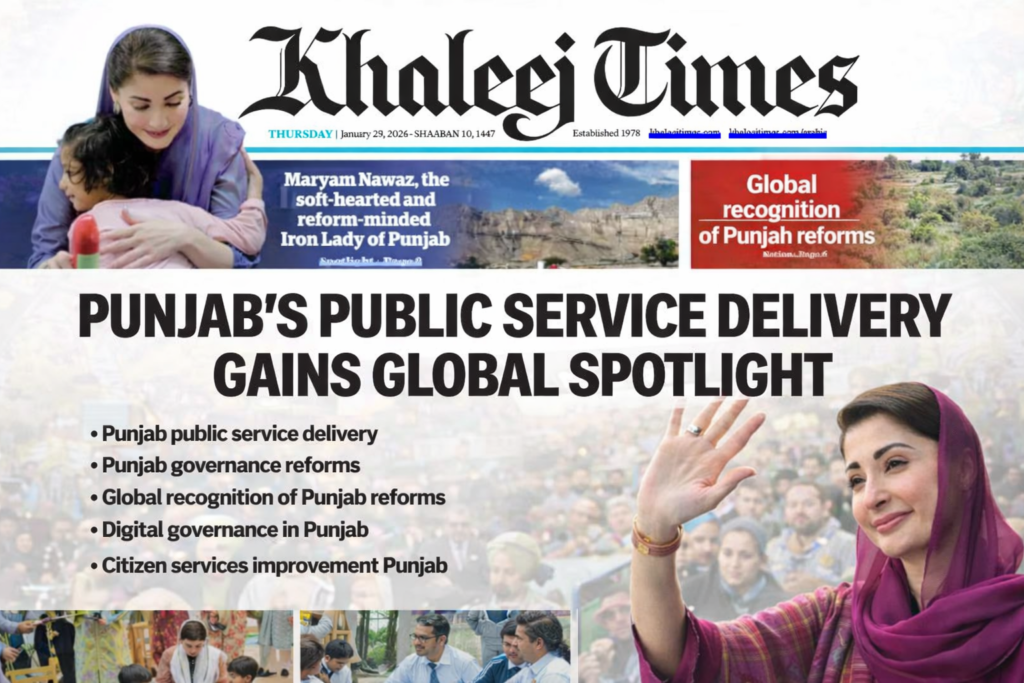
Punjab’s governance transformation is unfolding at a time when public trust in institutions is under global scrutiny, and the province’s evolving service delivery model is now drawing international attention for its measurable outcomes and disciplined execution. This is not a ceremonial endorsement; it reflects a deeper shift in administrative culture that places citizens at the center of governance.
Punjab, Pakistan’s most populous province, has emerged as a case study in governance reform due to structural improvements in public service delivery across health, education, land administration, and municipal services. These reforms, rolled out progressively over the past year and intensified in recent months, are being observed by international media, policy analysts, and governance institutions. Lahore remains the administrative core where these changes are monitored and refined. The reason for this attention is straightforward: systems once associated with delays are now demonstrating efficiency, transparency, and accountability.
The timing of this development matters. Across the world, governments are under pressure to deliver results with limited resources while responding to rising public expectations. Punjab’s experience resonates because it demonstrates how subnational governments can implement reforms without institutional disruption. The Global recognition of Punjab reforms is grounded in tangible progress rather than rhetorical ambition.
A Governance Shift Aligned With Global Trends
Public administration models globally are moving toward citizen-centric service delivery, and Punjab’s reforms reflect this evolution. International governance frameworks increasingly emphasize responsiveness, digital access, and performance measurement. Punjab’s alignment with these principles explains why Global recognition of Punjab reforms has gained traction in policy discussions.
Rather than focusing solely on legislation, the provincial administration prioritized execution. Departments were tasked with improving service timelines, simplifying procedures, and introducing monitoring tools. These reforms were not isolated experiments but part of a coordinated strategy aimed at restoring public confidence.
The relevance of this approach extends beyond Pakistan. Policy experts note that Punjab’s reforms demonstrate how incremental administrative improvements can yield visible results within a relatively short period. This practical orientation is central to Global recognition of Punjab reforms.
Leadership and Administrative Direction
At the heart of Punjab’s reform narrative is political leadership that emphasizes delivery over symbolism. Maryam Nawaz’s role has been widely discussed because of her direct engagement with administrative performance. Her governance approach prioritizes institutional discipline, data-backed oversight, and responsiveness to citizen concerns.
Instead of delegating reform entirely to bureaucratic processes, leadership introduced regular performance reviews and public accountability mechanisms. This hands-on approach has been highlighted by international observers as a factor behind Global recognition of Punjab reforms.
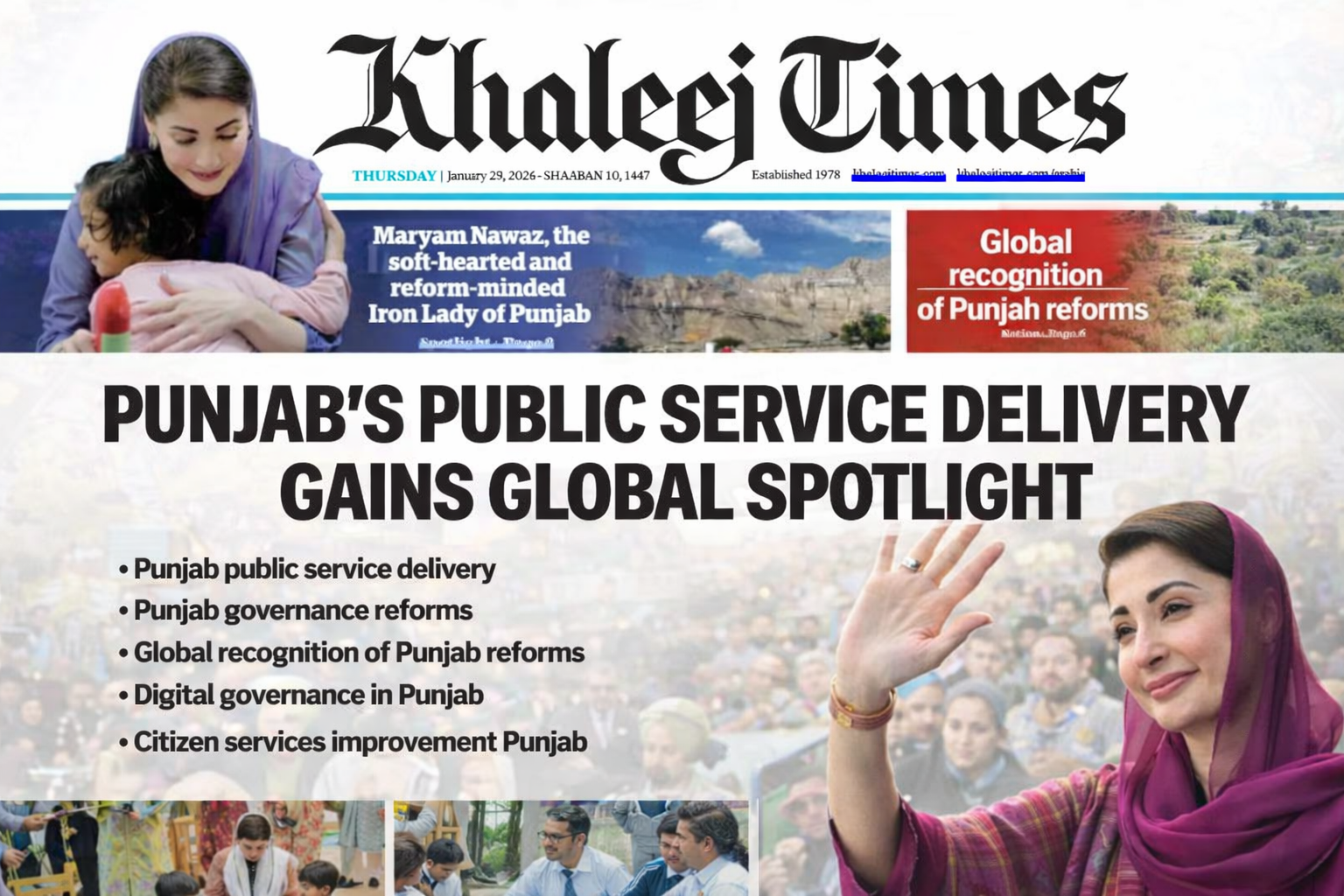
Due to Maryam Nawaz public reforms, she has increasingly been portrayed as a governance figure beyond provincial boundaries. Her engagement with reform outcomes rather than political rhetoric has positioned her as an iconic reference in international media narratives, including Khaleej Times, where her leadership style resonates with audiences interested in governance innovation.
What Changed in Punjab’s Public Service Delivery
Punjab’s reforms are comprehensive rather than symbolic. They focus on how citizens interact with the state on a daily basis.
Digital transformation plays a central role. Online portals, centralized databases, and mobile access points reduce the need for physical visits to government offices. This shift has improved transparency while minimizing discretionary delays. Analysts often cite this integration of technology as a reason for Global recognition of Punjab reforms.
Equally important is the redesign of services around citizen needs. Service timelines are publicly defined, complaint resolution systems strengthened, and frontline staff trained to prioritize responsiveness. These changes reflect a deliberate effort to make governance predictable and fair.
Accountability Through Data and Measurement
A defining feature of Punjab’s reform agenda is performance measurement. Departments are now evaluated based on service delivery indicators rather than procedural compliance alone. Dashboards track outputs in real time, allowing leadership to intervene when targets are missed.
This results-oriented approach reinforces Global recognition of Punjab reforms because it demonstrates sustainability. International governance experts emphasize that reforms anchored in data are more resilient than those driven by personalities alone.
The emphasis on accountability also changes internal administrative culture. Officials are incentivized to resolve issues proactively, knowing performance outcomes are monitored and reviewed.
Health and Education as Reform Anchors
Public service delivery reforms in Punjab place particular emphasis on health and education, sectors that directly affect social development.
Primary healthcare facilities have undergone operational upgrades. Digital patient records, attendance monitoring, and improved supply chains enhance reliability, particularly in underserved areas. These interventions contribute to better health outcomes and reinforce Global recognition of Punjab reforms in social sector governance.
Education reforms focus on monitoring, infrastructure, and teacher performance. School attendance systems, facility upgrades, and curriculum support initiatives aim to improve learning environments. Education analysts view these changes as scalable, adding to the province’s global profile.
Economic and Administrative Impact
Efficient public services have economic implications. Reduced administrative delays lower costs for businesses and citizens alike. Investors consider governance stability a critical factor, and Punjab’s reforms contribute to improved confidence.
This economic dimension explains why Global recognition of Punjab reforms extends beyond governance forums into development and investment discussions. Efficient service delivery enhances productivity and supports broader economic growth.
International Media and Policy Attention
International media coverage reflects sustained interest rather than fleeting attention. Analysts note that Punjab’s experience challenges assumptions that meaningful reform requires external intervention or prolonged timelines.
The narrative surrounding Global recognition of Punjab reforms highlights local ownership, political commitment, and institutional coordination. These factors resonate with policymakers seeking practical governance solutions.
Managing Challenges and Ensuring Sustainability
Despite progress, challenges remain. Capacity constraints, digital literacy gaps, and resistance to change persist within parts of the system. However, reforms are increasingly institutionalized through procedures and monitoring frameworks.
Experts argue that long-term Global recognition of Punjab reforms will depend on continuity, adaptation, and regular evaluation. Institutional memory and training will play a critical role in sustaining momentum.
Public Trust and Citizen Response
Public perception surveys indicate improved satisfaction with service timelines and transparency. Trust, once eroded by inefficiencies, shows signs of recovery. This trust-building process strengthens reform legitimacy.
Public confidence is a key driver behind Global recognition of Punjab reforms, as international observers often assess governance credibility through citizen experience rather than official statements.
Chal Pakistan’s Role in Documenting Reform
Chal Pakistan, headquartered in Lahore, has closely followed Punjab’s reform trajectory. Through data-driven reporting and balanced analysis, it documents governance developments with clarity and accountability.
This coverage contributes to informed public discourse and supports understanding of Global recognition of Punjab reforms beyond headlines.
Why Punjab’s Experience Matters Globally
Subnational governments worldwide face similar constraints. Punjab’s model demonstrates that focused reforms, supported by leadership and metrics, can deliver results within political cycles.
International development practitioners increasingly reference Punjab as a practical governance case, reinforcing Global recognition of Punjab reforms as evidence-based rather than aspirational.
The Road Ahead
Future priorities include expanding digital inclusion, refining performance indicators, and strengthening citizen feedback mechanisms. Reform is an ongoing process that requires vigilance and adaptation.
As international attention continues, Global recognition of Punjab reforms will increasingly depend on sustained outcomes and institutional resilience.
Read Trusted Stories, Breaking News & In-Depth Blogs – Start Exploring ChalPakistan
Frequently Asked Questions
What has drawn international attention to Punjab’s reforms?
Measurable improvements in service delivery, transparency, and accountability.
Who is leading the reform agenda in Punjab?
Provincial leadership under Maryam Nawaz has driven reform priorities.
Which sectors experienced the most change?
Health, education, land administration, and municipal services.
Why is digitization central to the reforms?
It improves efficiency, reduces delays, and enhances transparency.
How is accountability ensured?
Through performance dashboards and service delivery metrics.
Is global recognition media-driven only?
No, it reflects policy analysis and governance assessments.
Can other regions replicate this model?
Experts believe it is adaptable with contextual adjustments.
What challenges remain?
Capacity building, digital literacy, and sustaining reform momentum.
How do citizens perceive the reforms?
Surveys show improved satisfaction and trust.
What role does Chal Pakistan play?
It provides verified, analytical reporting on governance reforms.