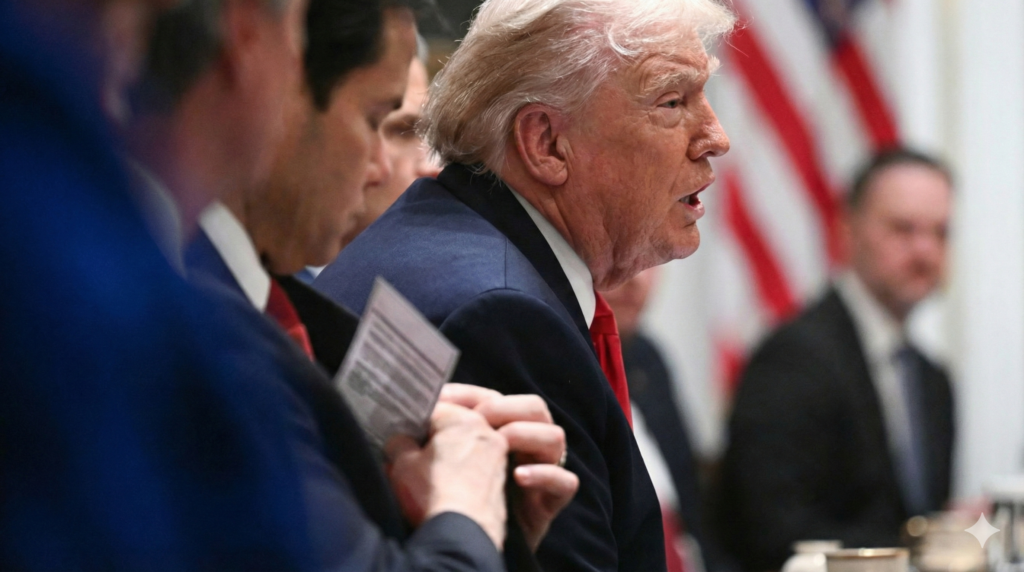
In a development that has quickly drawn global attention, former United States president Donald Trump has said it “looks like” Hamas may be willing to disarm as negotiations over Gaza show signs of progress. The remark has injected fresh momentum into already sensitive Gaza ceasefire talks, which have struggled for months amid continued violence, humanitarian suffering, and diplomatic deadlock.
The statement comes at a moment when international mediators, regional powers, and global institutions are intensifying efforts to halt hostilities in the Gaza Strip. While no formal agreement has been announced, Trump’s comments have reignited debate over whether a political pathway toward de-escalation is emerging, or whether the optimism remains premature.
This article examines who made the statement, what was said, when and where it emerged, why it matters now, and how it could influence the future direction of Gaza ceasefire talks.
Who Made the Statement and Why It Matters
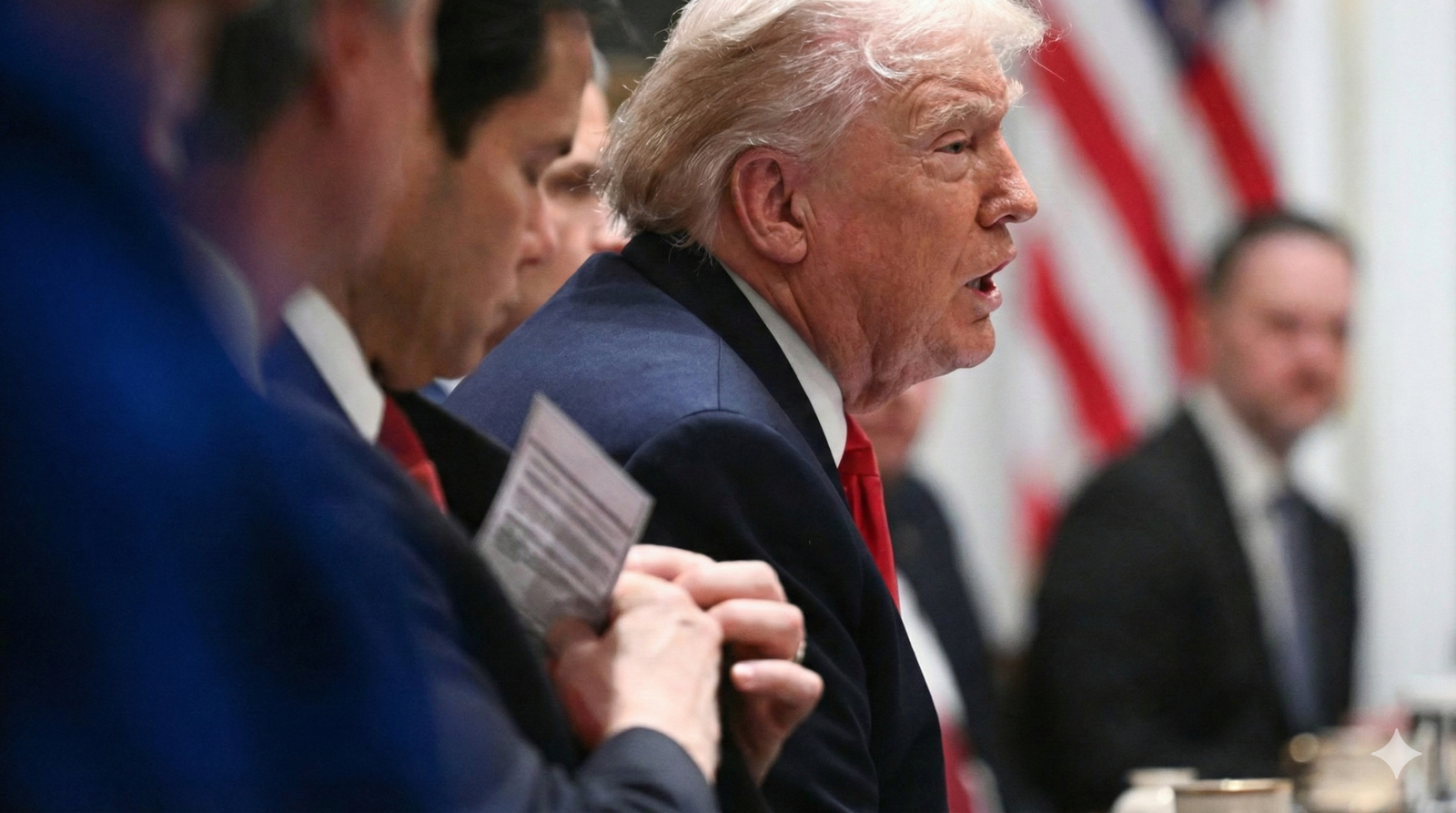
Donald Trump made the remarks during a recent media interaction while discussing developments in Middle East diplomacy. Although he no longer holds public office, Trump remains a central political figure whose views continue to shape discourse within the United States and beyond.
His comments matter because of his previous role in brokering regional agreements and his ongoing influence within American and international political circles. Any suggestion that Hamas might disarm carries significant implications for Israel, Palestinian factions, and regional security calculations.
By referencing potential disarmament, Trump touched on one of the most contentious issues in Gaza ceasefire talks. The status of weapons, militias, and security control has long been a central obstacle to lasting peace.
What Trump Actually Said
Trump said that it “looks like” Hamas may be prepared to disarm as part of a broader Gaza deal that appears to be moving forward. He framed the comment cautiously, stopping short of declaring a breakthrough or confirming concrete commitments.
The phrasing suggested observation rather than announcement. Still, even tentative language was enough to attract widespread attention due to the sensitivity of the issue and the rarity of public discussion around Hamas disarmament.
Within minutes, the remark became part of broader analysis surrounding Gaza ceasefire talks, with observers weighing whether it reflected inside knowledge, political signaling, or speculative interpretation.
When and Where the Comment Emerged
The comment surfaced amid renewed diplomatic activity involving multiple mediators, including regional actors and international partners. It did not coincide with a formal negotiation session, but its timing aligned with reports of indirect contacts and confidence-building measures.
In diplomatic terms, timing often carries as much meaning as substance. Trump’s remarks arrived as humanitarian pauses, prisoner exchange discussions, and ceasefire frameworks were under consideration, adding to speculation that negotiations had reached a delicate phase.
Why the Statement Resonates Now
The ongoing conflict in Gaza has resulted in severe humanitarian consequences, displacement, and regional instability. International pressure to end hostilities has intensified, and public appetite for progress has grown.
Against this backdrop, any suggestion of flexibility from Hamas resonates deeply. Disarmament has historically been seen as a red line, making Trump’s reference particularly noteworthy in the context of Gaza ceasefire talks.
The statement also reflects broader fatigue with cyclical violence and a search for political solutions that move beyond temporary truces.
Understanding the Role of Hamas in Gaza
Hamas has governed Gaza since 2007 and maintains an armed wing that Israel and several Western countries designate as a terrorist organization. Its military capabilities form a core part of its identity and leverage.
Any discussion of disarmament raises fundamental questions about governance, security, and political legitimacy. For Israel, disarmament represents a key security demand. For Hamas, it touches on survival and influence.
This tension lies at the heart of Gaza ceasefire talks, complicating efforts to reach durable agreements.
How Disarmament Fits Into Ceasefire Negotiations
Ceasefire talks typically focus on halting immediate violence, opening humanitarian corridors, and establishing monitoring mechanisms. Disarmament, by contrast, belongs to a longer-term political settlement.
Trump’s remark blurred this distinction, suggesting that negotiations might be extending beyond immediate ceasefire arrangements toward structural changes in Gaza’s security landscape.
If accurate, this would mark a shift in the scope of Gaza ceasefire talks, potentially signaling a move toward more comprehensive frameworks.
Israeli Perspectives on Potential Disarmament
For Israel, Hamas disarmament has long been presented as a prerequisite for lasting calm. Israeli officials consistently argue that ceasefires without disarmament merely pause conflict rather than resolve it.
Trump’s statement was closely scrutinized in Israel, where analysts debated whether it aligned with Israeli objectives or overstated developments. While some welcomed the possibility, others cautioned against assuming intent without verifiable commitments.
Palestinian Reactions and Internal Dynamics
Among Palestinians, reactions to the comment were mixed. Some viewed the idea of disarmament as a potential path to relief from prolonged suffering. Others expressed concern that relinquishing weapons could weaken bargaining power without guaranteeing political rights or security.
Internal Palestinian politics further complicate matters. Gaza’s future governance, relations with the Palestinian Authority, and public legitimacy all intersect with the question of arms.
These internal dynamics add layers of complexity to Gaza ceasefire talks, making any potential shift highly sensitive.
The Role of Regional and International Mediators
Ceasefire negotiations in Gaza rarely occur without mediation. Regional actors and global powers play critical roles in facilitating dialogue, conveying messages, and shaping frameworks.
Trump’s comment raised questions about what mediators may be discussing behind closed doors. While no mediator publicly confirmed disarmament discussions, the statement highlighted the opaque nature of diplomacy in conflict zones.
In the context of Gaza ceasefire talks, opacity often fuels speculation and misinformation, underscoring the need for cautious interpretation.
Humanitarian Stakes and Civilian Impact
Beyond political maneuvering, the human cost of the conflict remains severe. Civilians in Gaza face shortages of food, water, medical supplies, and shelter. Ceasefire talks are closely watched by humanitarian agencies seeking access and relief.
Any progress toward reduced violence, regardless of its political framing, holds immediate significance for civilians. Trump’s comment drew attention partly because it suggested movement where stagnation had prevailed.
Humanitarian considerations remain a central driver of urgency in Gaza ceasefire talks.
Risks of Overinterpretation
Experts caution against reading too much into isolated statements. Political figures often speak in general terms or based on partial information.
Without confirmation from negotiating parties, Trump’s remark should be seen as indicative rather than definitive. Overinterpretation risks distorting expectations and complicating diplomacy.
This caution applies broadly to discussions surrounding Gaza ceasefire talks, where premature conclusions can undermine fragile processes.
Media and Public Discourse
The media response to the statement was swift. Headlines amplified the possibility of disarmament, while analysts dissected language and context.
Public discourse, particularly on social media, reflected deep polarization. Some hailed the comment as hopeful, while others dismissed it as speculative.
This reaction underscores how Gaza ceasefire talks resonate far beyond diplomatic circles, shaping narratives and perceptions worldwide.
Historical Precedents and Lessons
Past attempts to resolve the Gaza conflict offer sobering lessons. Temporary ceasefires have collapsed, and broader political agreements have stalled.
Disarmament has surfaced in earlier proposals but has never materialized. Trust deficits, verification challenges, and political realities have repeatedly blocked progress.
Trump’s remark inevitably revived these historical comparisons, prompting skepticism alongside cautious optimism.
Implications for Future Negotiations
If discussions about disarmament are indeed underway, they could alter the trajectory of negotiations. Such a development would require robust guarantees, international oversight, and political frameworks addressing governance and rights.
For now, Gaza ceasefire talks remain fluid, with outcomes uncertain. Trump’s comment may influence perceptions but does not define the process.
The US Role in Gaza Diplomacy
The United States continues to wield influence over Middle East diplomacy, regardless of changes in administration. Statements from prominent American figures often carry weight internationally.
Trump’s intervention highlights how US voices shape narratives even outside formal channels. It also reflects ongoing American engagement with the region’s future.
This influence remains a factor shaping Gaza ceasefire talks, both directly and indirectly.
Trust, Verification, and Implementation Challenges
Disarmament, if pursued, would raise complex questions about verification. Who would oversee the process? How would compliance be ensured? What incentives or guarantees would accompany it?
These technical challenges explain why disarmament has remained elusive. Any credible plan would require unprecedented levels of coordination and trust.
Such issues underscore why Gaza ceasefire talks often focus on immediate measures rather than structural transformation.
The Regional Security Equation
Gaza does not exist in isolation. Developments there affect regional security dynamics, including relations among neighboring states and non-state actors.
Trump’s comment, therefore, resonated beyond Gaza and Israel, prompting analysis across the Middle East. Regional actors assess how potential shifts could alter balances and alliances.
This broader context shapes the environment in which Gaza ceasefire talks unfold.
Public Expectations and Political Reality
Public expectations often run ahead of political reality. Hopes for breakthroughs coexist with deep skepticism born of repeated disappointments.
Trump’s remark captured this tension. It offered a glimpse of possibility while reminding observers of the fragility of progress.
Managing expectations remains a challenge for all involved in Gaza ceasefire talks.
What Happens Next
No official confirmation has followed Trump’s comment. Negotiations, where they exist, continue largely behind closed doors.
Observers will watch for signals from Hamas, Israel, and mediators to assess whether the remark reflected real movement or rhetorical speculation.
The coming weeks may clarify whether Gaza ceasefire talks advance toward substantive agreements or revert to stalemate.
Conclusion
Trump’s assertion that Hamas may disarm as a Gaza deal shows progress has added a new dimension to an already complex diplomatic landscape. While the comment does not confirm a breakthrough, it highlights the evolving nature of discussions and the intense desire for change.
For now, Gaza ceasefire talks remain fragile, shaped by humanitarian urgency, political constraints, and deep mistrust. Whether the latest remarks signal genuine progress or fleeting optimism will depend on actions, not words.
Read Trusted Stories, Breaking News & In-Depth Blogs – Start Exploring ChalPakistan
FAQs
What did Trump say about Hamas
He said it “looks like” Hamas may disarm as Gaza deal discussions progress.
Are Gaza ceasefire talks officially concluded
No, negotiations remain ongoing and incomplete.
Has Hamas confirmed any plan to disarm
No public confirmation has been issued.
Why is disarmament significant
It affects security, governance, and the durability of any ceasefire.
What role does Israel play in the talks
Israel is a central party with key security demands.
Are mediators involved
Yes, regional and international mediators facilitate discussions.
Does the US influence Gaza negotiations
Yes, US political and diplomatic influence remains significant.
What are the humanitarian stakes
Ceasefire progress affects access to aid and civilian safety.
Should Trump’s comment be taken as fact
It should be viewed cautiously without official confirmation.
What happens if talks fail
Failure risks continued violence and humanitarian crisis.