By ChalPakistan, Lahore
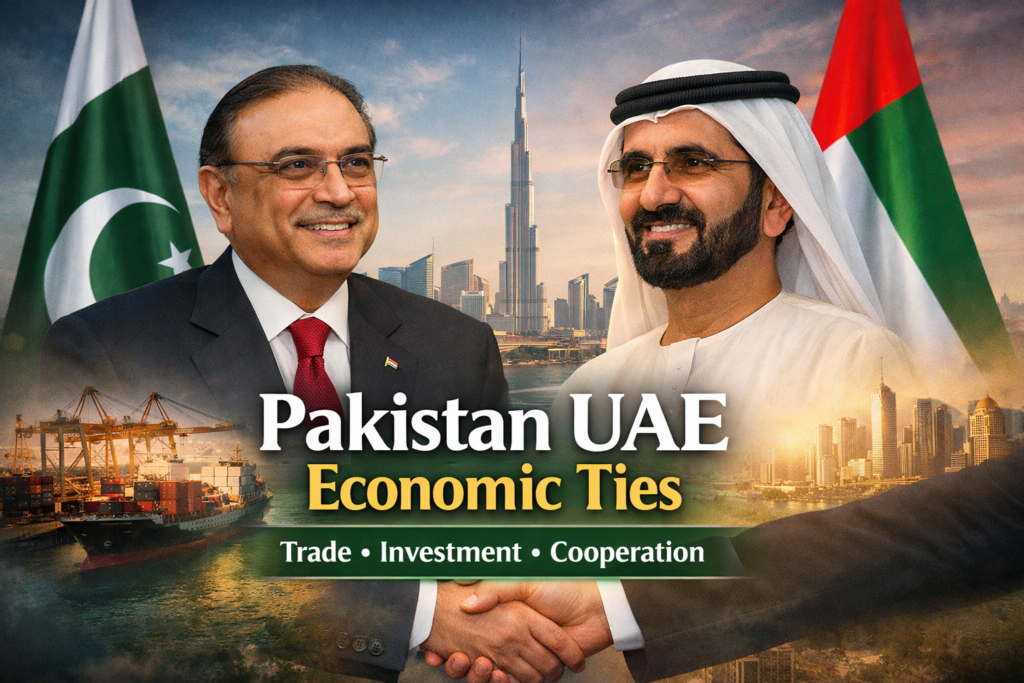
Pakistan and the United Arab Emirates continue to strengthen their long-standing partnership as President Asif Ali Zardari met UAE Vice President and Ruler of Dubai Sheikh Mohammed bin Rashid Al Maktoum on Wednesday. The meeting focused on expanding cooperation in trade, investment, and economic development, reflecting the growing importance of Pakistan UAE economic ties in the regional and global landscape.
Held at Zabeel Palace in Dubai, the high-level discussion underscored the shared commitment of both countries to deepen bilateral relations and unlock new opportunities for collaboration. Officials from both sides described the talks as productive, forward-looking, and aligned with the strategic interests of Pakistan and the UAE.
A Timely Diplomatic Engagement
The meeting comes at a crucial moment for Pakistan as the country pursues economic reforms and seeks greater foreign investment. For the UAE, Pakistan remains a key regional partner with strong people-to-people connections and growing trade potential.
According to a statement released by the President’s Secretariat, both leaders discussed ways to further strengthen bilateral relations with a specific focus on economic, trade, and investment cooperation. The conversation reflected mutual confidence in the direction of Pakistan UAE economic ties, which have steadily expanded over the years.
Zabeel Palace Meeting Highlights
President Zardari met Sheikh Mohammed bin Rashid Al Maktoum, who also serves as the Prime Minister of the UAE and the Ruler of Dubai, at the historic Zabeel Palace. The venue symbolized the significance of the meeting and the respect shared between the two leaders.
During the discussion, President Zardari congratulated Sheikh Mohammed on completing two decades as the ruler of Dubai. He praised Dubai’s transformation into a global hub for tourism, finance, and emerging technologies, highlighting its development as a model for other countries, including Pakistan.
The president commended Dubai’s strategic planning and visionary leadership, which helped position the city as a leading global center for innovation and commerce.
Learning From Dubai’s Development Experience
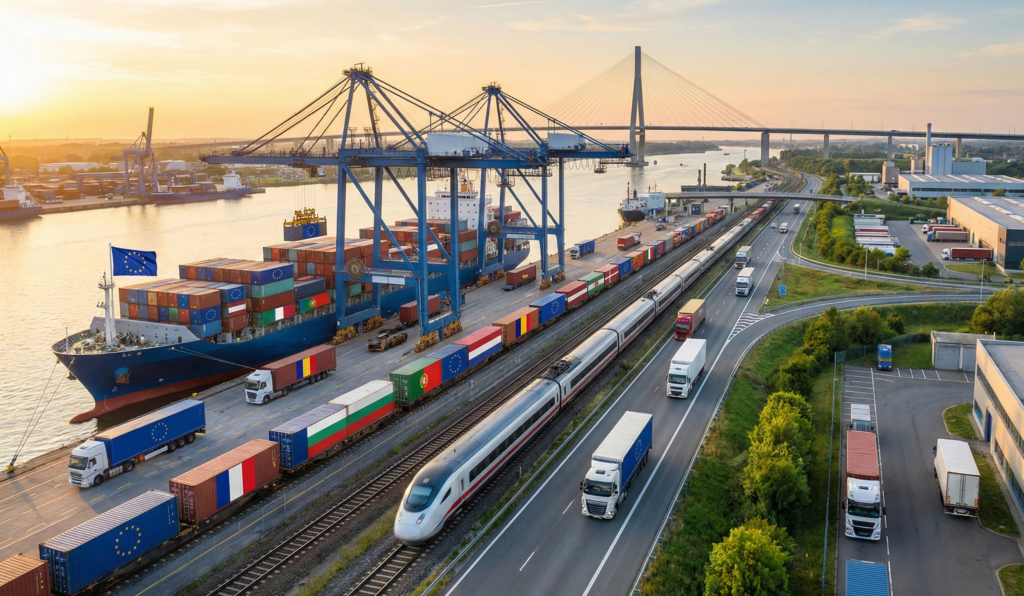
A major theme of the meeting involved learning from Dubai’s development journey. Both sides exchanged views on benefiting from Dubai’s experience in ports, logistics, infrastructure, information technology, and digital financial services.
President Zardari expressed Pakistan’s interest in adopting best practices from Dubai, especially in areas that support trade facilitation and economic growth. These discussions reinforced the practical dimension of Pakistan UAE economic ties, moving beyond diplomatic goodwill toward actionable cooperation.
Officials noted that collaboration in logistics and port development could significantly enhance Pakistan’s regional connectivity and trade capacity.
Pakistan’s Economic Reform Agenda
During the meeting, President Zardari highlighted Pakistan’s ongoing economic reforms. He briefed Sheikh Mohammed on government efforts to improve investment facilitation, streamline regulations, and advance privatization initiatives.
The president emphasized that Pakistan seeks reliable international partners to support infrastructure development and technology driven growth. He explored opportunities for enhanced cooperation with the UAE in sectors such as infrastructure, logistics, food security, and digital innovation.
These reforms align with Pakistan’s broader strategy to stabilize the economy and attract long-term foreign investment. Strengthening Pakistan UAE economic ties plays a central role in achieving these objectives.
Investment and Trade Cooperation
Trade and investment cooperation formed the core of the discussions. Both leaders recognized the vast untapped potential in bilateral trade and agreed on the need to expand commercial exchanges.
The UAE remains one of Pakistan’s largest trading partners and a major source of remittances. Officials believe that improved market access, better logistics, and supportive policies can significantly boost bilateral trade volumes.
The talks emphasized collaboration in investment projects that create jobs, promote technology transfer, and support sustainable development in Pakistan.
Invitation to Visit Pakistan
As a gesture of goodwill and strategic engagement, President Zardari extended an invitation to Sheikh Mohammed bin Rashid Al Maktoum to visit Pakistan. The invitation reflects Pakistan’s desire to further elevate high-level exchanges and deepen diplomatic engagement.
A future visit could help advance discussions on investment projects and strengthen mutual understanding between the leadership of both countries. Such exchanges remain vital for sustaining Pakistan UAE economic ties.
Reaffirming Brotherly Relations
The President’s Secretariat stated that both sides reaffirmed their commitment to strengthening the brotherly relations between Pakistan and the UAE. Leaders expressed satisfaction over the positive trajectory of bilateral ties and emphasized the importance of continuity in engagement.
Officials described the relationship as one based on trust, shared values, and mutual respect. This foundation has allowed Pakistan and the UAE to cooperate closely across political, economic, and humanitarian domains.
Importance of High-Level Exchanges
During the meeting, both leaders underscored the importance of high-level exchanges in maintaining momentum in bilateral relations. They recalled the recent visit of UAE President Sheikh Mohamed bin Zayed Al Nahyan to Pakistan and acknowledged the UAE’s continued support for Pakistan’s economic development.
Such visits provide strategic direction and reinforce institutional cooperation between the two countries. They also help address challenges and identify new areas for collaboration within Pakistan UAE economic ties.
Role of the Pakistani Community in the UAE
The leaders also highlighted the valuable contribution of the Pakistani community in the UAE. Millions of Pakistanis live and work in the UAE, contributing to its economy and strengthening people-to-people links.
Remittances from the UAE form a significant part of Pakistan’s foreign exchange inflows. The community acts as a bridge between the two nations, reinforcing cultural understanding and economic interdependence.
Both sides acknowledged the importance of protecting the welfare of Pakistani expatriates and enhancing opportunities for skilled workers.
Key Participants in the Meeting
The meeting was attended by First Lady Bibi Aseefa Bhutto-Zardari, PPP Chairman Bilawal Bhutto-Zardari, and Pakistan’s Ambassador to the UAE. Their presence highlighted the political importance of the engagement and reflected a unified approach to foreign relations.
Officials noted that Pakistan’s diplomatic mission in the UAE plays a critical role in facilitating trade, investment, and community relations.
DP World and Pakistan’s Trade Vision
In a related development, President Zardari met with DP World Chairman and Chief Executive Officer Sultan Ahmed bin Sulayem. The meeting focused on Pakistan’s evolving partnership with the Dubai-based logistics company.
According to a separate handout, the president appreciated DP World’s strong and sustained partnership with Pakistan. He acknowledged the company’s contribution to logistics, port operations, and infrastructure development.
This partnership represents a practical example of how Pakistan UAE economic ties translate into long-term investment and operational cooperation.
Pakistan as a Regional Trade Hub
During the meeting with DP World leadership, President Zardari reviewed the evolving Pakistan-DP World engagement. He noted that recent inter-governmental agreements reflect strong commitment on both sides.
The president stated that these initiatives align with Pakistan’s objective of positioning itself as a regional trade and transit hub through enhanced connectivity and modern logistics infrastructure.
Officials emphasized Pakistan’s geographic advantage, which offers access to Central Asia, South Asia, and the Middle East.
DP World’s Perspective on Pakistan
DP World has previously described Pakistan as a natural hub for trade due to its strategic location and growing infrastructure. The company continues to explore opportunities to expand its footprint in the country.
Improved ports, logistics corridors, and digital systems can significantly enhance Pakistan’s role in regional trade. Such investments directly support the long-term goals of Pakistan UAE economic ties.
Infrastructure and Connectivity Development
Infrastructure development emerged as a shared priority during the discussions. Both sides recognized the need for modern ports, efficient logistics networks, and integrated supply chains.
Collaboration with UAE companies offers Pakistan access to global expertise and capital. In turn, Pakistan provides growth opportunities in emerging markets and regional trade routes.
Officials stressed that infrastructure projects must align with sustainability and economic inclusion goals.
Technology and Digital Cooperation
Technology driven sectors also featured prominently in the discussions. Leaders explored cooperation in information technology, digital financial services, and smart infrastructure.
Pakistan’s growing tech sector presents opportunities for collaboration with UAE investors and innovators. Digital solutions can improve efficiency, transparency, and service delivery across sectors.
This area represents a forward-looking dimension of Pakistan UAE economic ties.
Food Security and Agriculture
Food security formed another important topic during the meeting. Both sides discussed opportunities for cooperation in agriculture, food processing, and supply chain management.
Pakistan’s agricultural capacity, combined with UAE investment and technology, can help address food security challenges while creating economic value.
Officials noted that joint ventures in agriculture could support sustainable development and export growth.
Strategic Importance of UAE Support
The UAE has consistently supported Pakistan during economic challenges. Financial assistance, investment commitments, and development projects reflect the depth of the relationship.
Leaders acknowledged the UAE’s role in supporting Pakistan’s economic stability and reform efforts. This support strengthens confidence among international investors and partners.
Regional and Global Context
The meeting took place amid evolving regional dynamics and global economic uncertainty. Strengthening bilateral partnerships remains essential for resilience and growth.
Pakistan and the UAE share an interest in regional stability, economic integration, and sustainable development. Enhanced cooperation contributes to shared prosperity.
Media and Public Perception
Observers note that such high-level engagements send positive signals to markets and investors. They reflect political will and strategic alignment between the two countries.
Public communication around Pakistan UAE economic ties emphasizes partnership, opportunity, and mutual benefit rather than short-term gains.
Long-Term Outlook for Bilateral Relations
Analysts believe that Pakistan-UAE relations will continue to deepen across economic, political, and cultural domains. Investment in infrastructure and technology can transform Pakistan’s economic landscape.
Sustained engagement and policy continuity remain critical for long-term success. Both countries appear committed to this path.
Conclusion
President Asif Ali Zardari’s meeting with UAE Vice President Sheikh Mohammed bin Rashid Al Maktoum marked another significant step in strengthening bilateral relations. The discussions reflected shared priorities in economic growth, trade expansion, and investment cooperation.
From learning from Dubai’s development experience to expanding partnerships with companies like DP World, the talks highlighted practical avenues for collaboration. The reaffirmation of brotherly ties and mutual commitment underscores the resilience of Pakistan UAE economic ties.
As Pakistan advances its reform agenda and the UAE continues to invest globally, the partnership between the two nations holds strong potential for shared progress and long-term stability.
What was the purpose of President Zardari’s meeting with the UAE vice president?
The meeting aimed to strengthen bilateral relations with a focus on economic, trade, and investment cooperation.
Where did President Zardari meet Sheikh Mohammed bin Rashid Al Maktoum?
The meeting took place at Zabeel Palace in Dubai.
Which areas of cooperation were discussed during the meeting?
The leaders discussed trade, investment, infrastructure, logistics, technology, food security, and digital financial services.
Why is Dubai’s development experience important for Pakistan?
Dubai’s success in ports, logistics, and technology offers valuable lessons for Pakistan’s economic growth.
How do Pakistan’s economic reforms relate to UAE cooperation?
Pakistan’s reforms aim to attract foreign investment, and UAE partnerships can support infrastructure and technology development.
What role does DP World play in Pakistan?
DP World contributes to port operations, logistics, and infrastructure development in Pakistan.
Why is Pakistan considered a natural trade hub?
Pakistan’s strategic location connects South Asia, Central Asia, and the Middle East, making it ideal for trade and transit.
How do Pakistanis in the UAE contribute to bilateral ties?
The Pakistani community strengthens people-to-people links and contributes significantly to the UAE economy.
Did President Zardari invite the UAE vice president to Pakistan?
Yes, President Zardari extended an invitation for an official visit to Pakistan.
How do high-level visits impact Pakistan-UAE relations?
They help maintain momentum, align policies, and strengthen long-term cooperation between the two countries.