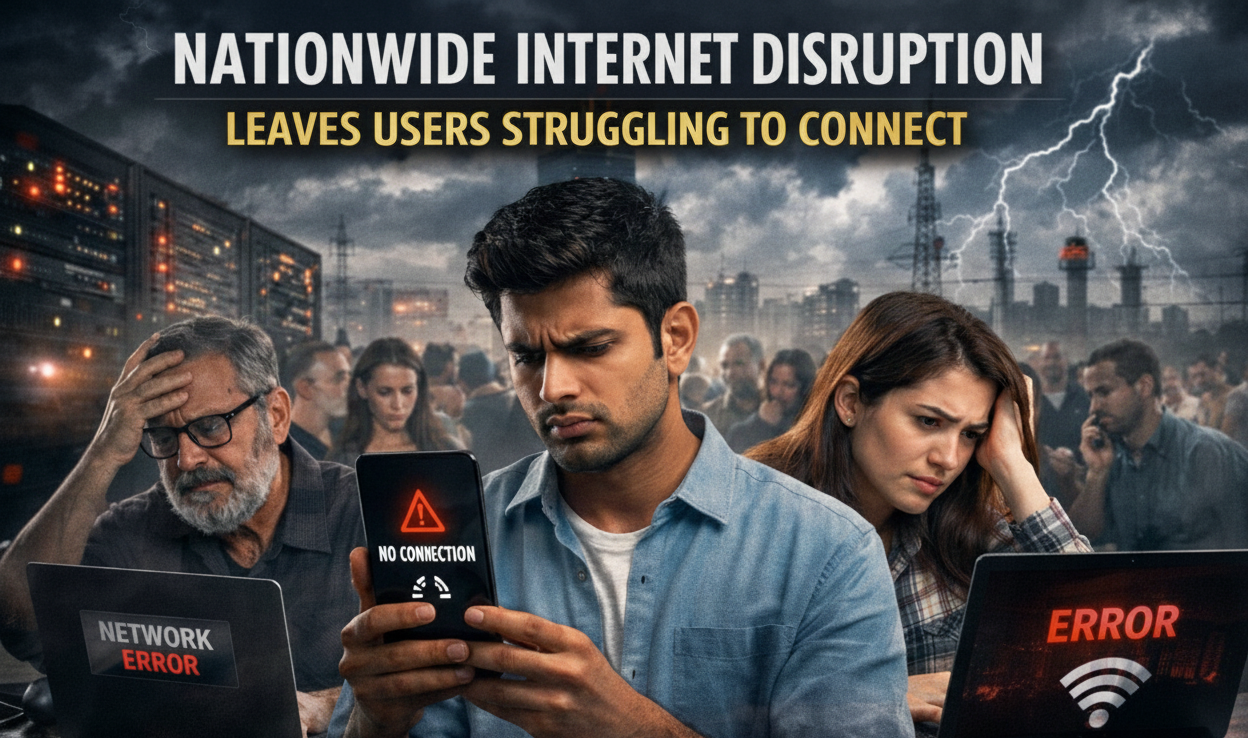
Pakistan experienced a severe digital setback as a nationwide internet disruption left millions of users unable to connect, communicate, or continue daily online activities. From Lahore, Pakistan, to remote regions, individuals and businesses faced sudden service failures that disrupted routines and triggered widespread frustration. Internet connectivity now forms the backbone of education, commerce, governance, and entertainment. Therefore, when access collapses, the impact reaches far beyond inconvenience. Chal Pakistan closely observed how this disruption exposed the country’s increasing dependence on digital infrastructure and highlighted urgent systemic vulnerabilities.
The nationwide internet disruption unfolded unexpectedly, catching households, offices, and institutions off guard. Social media platforms slowed, essential apps stopped responding, and video calls disconnected repeatedly. As minutes turned into hours, uncertainty grew. People searched for answers, while service providers issued limited updates. Consequently, public concern intensified across digital platforms whenever partial access returned.
How the Disruption Began
Early reports suggested irregular network behavior during peak hours. Users first noticed slower speeds, followed by complete signal drops. Internet service providers struggled to stabilize systems, while technical teams worked under pressure. Meanwhile, users refreshed routers and mobile data settings repeatedly, hoping for restoration.
The nationwide internet disruption did not remain localized. Instead, it spread rapidly across provinces, affecting both broadband and mobile data users. This wide coverage confirmed that the issue extended beyond routine maintenance or isolated faults.
Lahore at the Center of the Digital Slowdown
Lahore, Pakistan, felt the impact immediately. Businesses relying on cloud systems halted operations, freelancers missed deadlines, and students lost access to virtual classes. Coffee shops, co-working spaces, and software houses reported near-complete shutdowns. As a result, productivity losses mounted quickly.
The nationwide internet disruption transformed Lahore’s usually vibrant digital ecosystem into a standstill. Entrepreneurs emphasized that even short outages create long-term consequences in a competitive global market.
Impact on Education and Students
Online education suffered significantly during the disruption. Virtual classrooms disconnected mid-lecture, assignment submissions failed, and examination portals froze. Students preparing for international tests faced additional stress. Teachers attempted to reschedule sessions, yet uncertainty persisted.
The nationwide internet disruption highlighted education’s fragile reliance on uninterrupted connectivity. While digital learning expanded rapidly in recent years, infrastructure resilience did not grow at the same pace.
Businesses and the Economic Ripple Effect
Small and medium enterprises bore the brunt of the disruption. Online orders stalled, payment gateways failed, and customer support lines went silent. Freelancers, who rely heavily on international clients, faced reputational risks due to missed commitments.
The nationwide internet disruption demonstrated how deeply digital access influences income stability. Even brief outages can translate into lost revenue, delayed transactions, and damaged trust.
Freelancers and Remote Workers Under Pressure
Pakistan’s freelance community depends on constant connectivity. During the disruption, many workers struggled to meet deadlines or communicate with clients abroad. Platforms loaded slowly or not at all, leaving professionals anxious.
The nationwide internet disruption reinforced the reality that remote work success depends as much on infrastructure as skill. Without reliable access, global competitiveness weakens instantly.
Social Media Silence and Communication Gaps
Social platforms slowed dramatically, limiting news sharing and public updates. Families attempting to check on relatives faced delays. Businesses lost visibility, while influencers paused content schedules.
The nationwide internet disruption temporarily silenced digital conversations, reminding users how online spaces shape modern social interaction.
Healthcare and Emergency Concerns
Telemedicine services encountered interruptions, affecting appointment scheduling and patient communication. Although emergency systems remained operational, support platforms experienced delays.
The nationwide internet disruption raised concerns about healthcare readiness in digitally dependent environments. Reliable connectivity remains essential for timely medical coordination.
Government Services and Administrative Delays
E-government portals slowed or became inaccessible. Citizens attempting to submit forms or access records faced repeated errors. Offices issued advisories urging patience.
The nationwide internet disruption exposed how administrative efficiency now hinges on digital stability. When systems fail, public service delivery suffers.
Public Reaction and Growing Frustration
As hours passed, frustration spilled onto social platforms whenever connectivity briefly returned. Users demanded transparency, accountability, and infrastructure upgrades. Hashtags related to connectivity trended nationwide.
The nationwide internet disruption shifted public discourse toward digital rights and service reliability, reflecting growing awareness among citizens.
Technical Challenges Behind the Scenes
Experts suggested possible causes including fiber faults, routing issues, or upstream provider instability. While officials avoided speculation, they confirmed extensive troubleshooting efforts.
The nationwide internet disruption emphasized the complexity of modern networks, where multiple dependencies can amplify failures.
Role of Internet Service Providers
Service providers worked to restore stability, issuing progress updates and deploying emergency teams. However, communication gaps frustrated users seeking clarity.
The nationwide internet disruption underscored the need for proactive customer communication during crises.
Cybersecurity Speculation and Clarifications
Some users speculated about cyber incidents, although authorities dismissed such claims. Officials emphasized technical issues rather than malicious activity.
The nationwide internet disruption illustrated how misinformation can spread quickly during digital crises, increasing public anxiety.
Media Coverage and Information Flow
News outlets played a critical role in updating the public. Real-time reporting helped counter rumors and provided reassurance.
The nationwide internet disruption reaffirmed journalism’s importance during infrastructure emergencies.
Lessons for Digital Resilience
This incident highlighted the need for redundancy, investment, and regulatory oversight. Experts recommended diversified routing and stronger monitoring systems.
The nationwide internet disruption should serve as a wake-up call for long-term planning and resilience building.
Future Preparedness and Policy Direction
Policymakers now face pressure to prioritize digital infrastructure. Citizens expect accountability and preventive measures.
The nationwide internet disruption may influence future policy decisions regarding technology investment and service standards.
Public Trust and Service Expectations
Repeated disruptions erode trust. Users demand reliability comparable to utilities like electricity and water.
The nationwide internet disruption shifted expectations, positioning connectivity as a basic necessity rather than a luxury.
Moving Forward with Awareness
As services gradually stabilized, normalcy returned. However, memories of disruption lingered. Users became more conscious of backup solutions and offline alternatives.
The nationwide internet disruption left a lasting impression, reminding Pakistan of its digital dependency.
A Defining Digital Moment
This event marked a turning point in national awareness. Connectivity failures now spark immediate dialogue about preparedness and accountability.
Chal Pakistan views this disruption as a defining digital moment that demands reflection, reform, and responsible action.
Frequently Asked Questions
What caused the nationwide internet disruption?
Technical issues within network infrastructure triggered widespread connectivity failure.
Which areas were most affected?
Major cities including Lahore, Pakistan, experienced severe disruptions.
How long did the disruption last?
Service instability continued for several hours with gradual restoration.
Did mobile data also fail?
Yes, both broadband and mobile internet users faced connectivity issues.
Was cybersecurity involved?
Authorities denied cyberattack involvement and cited technical causes.
How did businesses respond?
Many halted operations and informed clients about delays.
Were online classes affected?
Yes, virtual education platforms experienced widespread interruptions.
Did government services stop?
Several e-government portals slowed or became temporarily inaccessible.
What lessons emerged from this event?
The need for resilient digital infrastructure became evident.
Will steps be taken to prevent future disruptions?
Officials indicated plans to strengthen systems and monitoring.