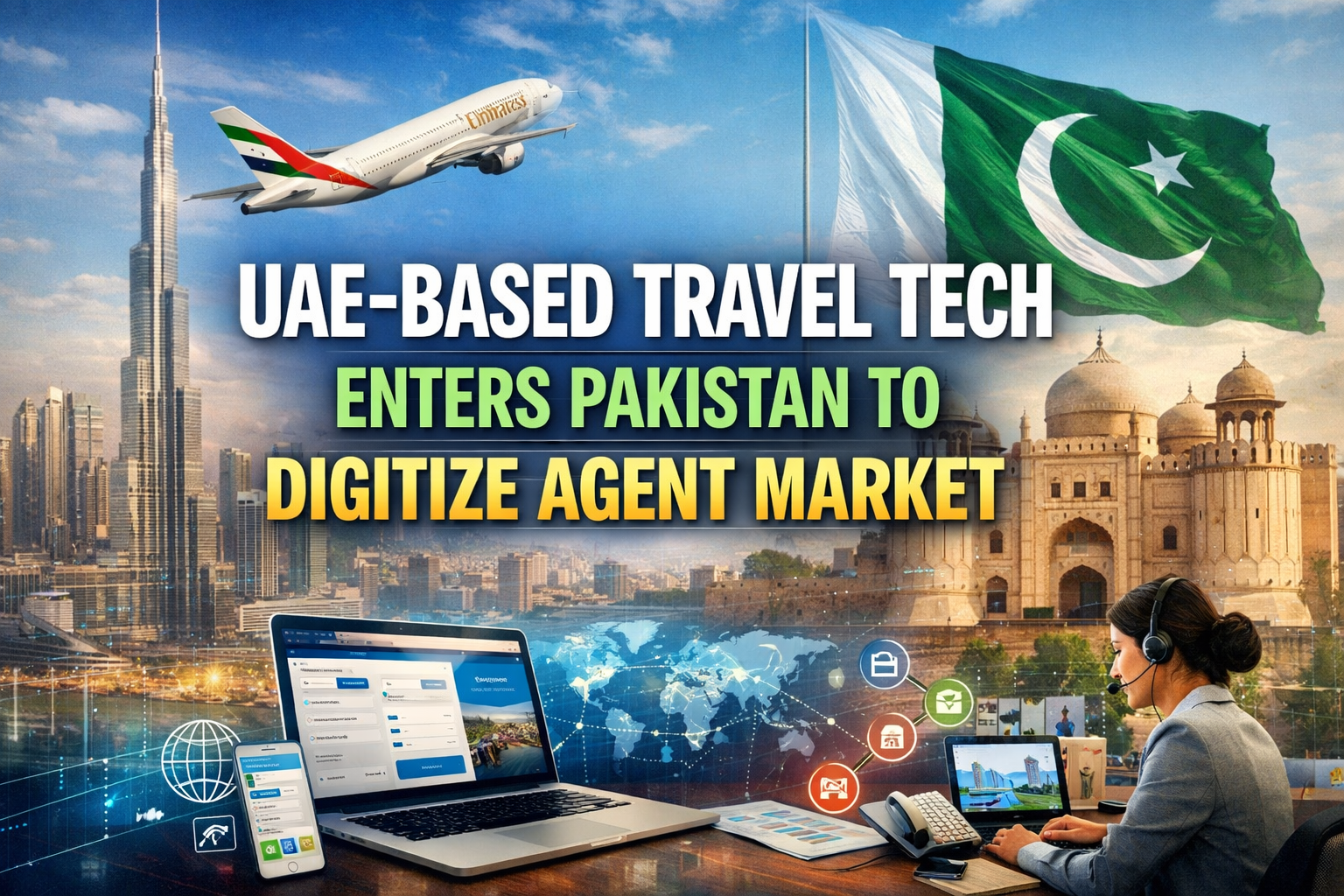
Pakistan’s travel industry is entering a transformative era as UAE-based travel technology companies expand into the local market with a clear mission to modernize traditional agency operations. This strategic move arrives at a critical moment when digital adoption, efficiency demands, and global connectivity are reshaping how travel services operate. For decades, Pakistani travel agents relied on manual processes, fragmented systems, and limited access to global platforms. Now, technology-driven solutions promise transparency, speed, scalability, and global competitiveness.
Chal Pakistan recognizes this shift as a defining moment for the national travel ecosystem. Lahore, as a commercial and service hub, sits at the center of this evolution. With increasing outbound travel, religious tourism demand, and corporate mobility, the market requires digital systems that empower agents rather than replace them. This is where Pakistan travel agent digitization becomes not just a trend, but a necessity.
Understanding the Traditional Agent Market in Pakistan
Pakistan’s agent market grew organically through personal relationships, trust-based transactions, and local networks. Agents managed bookings through phone calls, spreadsheets, and disconnected supplier portals. While this system worked for years, it limited scalability and transparency. Moreover, global travel trends moved rapidly toward automation, data-driven pricing, and instant confirmations.
As competition increased, agents faced shrinking margins and higher customer expectations. Travelers now expect real-time pricing, digital tickets, seamless refunds, and instant support. Without modern tools, agents struggled to keep pace. Consequently, inefficiencies widened the gap between local agencies and global platforms.
This challenge laid the foundation for Pakistan travel agent digitization to emerge as a structural solution rather than a luxury.
Why UAE-Based Travel Tech Is Targeting Pakistan
UAE-based travel tech firms bring mature platforms shaped by highly competitive markets like Dubai and Abu Dhabi. These companies understand high-volume bookings, dynamic pricing, multi-currency transactions, and regulatory compliance. Pakistan offers an untapped opportunity with thousands of agents eager for modernization.
Additionally, cultural ties, travel corridors, and religious tourism flows strengthen this expansion. UAE firms recognize that digitizing Pakistani agents unlocks a massive B2B opportunity while strengthening regional travel infrastructure. As a result, technology becomes a bridge rather than a barrier.
Core Technologies Driving Agent Digitization
At the heart of Pakistan travel agent digitization lies integrated technology. These platforms combine flight booking engines, hotel inventories, visa processing, reporting dashboards, and customer management systems. Instead of juggling multiple suppliers, agents access everything from one interface.
Furthermore, AI-powered pricing tools analyze demand patterns and recommend optimal fares. Automated invoicing reduces errors, while real-time inventory prevents overbooking. Agents gain control, speed, and credibility in front of clients.
Impact on Small and Mid-Sized Agencies
Small agencies often fear digitization due to cost concerns. However, UAE-based platforms focus on subscription models rather than heavy upfront investments. This approach allows agencies in Lahore and beyond to adopt technology gradually.
As agencies digitize, productivity increases. Agents handle more clients without expanding staff. At the same time, error rates decline and customer satisfaction rises. Consequently, small agencies gain the ability to compete with larger players on service quality rather than price alone.
Changing Customer Expectations in Pakistan
Pakistani travelers today are digitally aware. They compare prices online, track flights, and expect instant confirmations. When agencies cannot deliver these experiences, customers migrate elsewhere. Therefore, Pakistan travel agent digitization directly influences customer retention.
Digital platforms enable agents to offer mobile tickets, automated alerts, and transparent pricing. This builds trust and positions agents as professional advisors rather than mere middlemen.
Regulatory and Compliance Advantages
Compliance remains a major challenge in travel operations. Manual record keeping increases audit risks and delays. Digitized systems automatically log transactions, generate tax reports, and maintain booking histories.
For Pakistani agencies, this means improved compliance with aviation authorities, banks, and tax regulators. UAE-based platforms already meet strict international standards, which helps elevate local practices across the industry.
Employment and Skill Development Opportunities
Contrary to fears, digitization does not eliminate jobs. Instead, it reshapes roles. Agents transition from clerical tasks to advisory services. This shift creates demand for skilled professionals who understand technology, customer service, and data analysis.
Training programs offered by travel tech companies upskill the workforce. Lahore-based agencies now invest in digital literacy, which strengthens long-term industry resilience.
Competitive Advantage for Early Adopters
Agencies that adopt Pakistan travel agent digitization early gain a measurable advantage. They respond faster, quote accurately, and manage operations efficiently. Over time, these agencies build stronger reputations and customer loyalty.
Late adopters, however, risk losing relevance. As digital experiences become standard, manual operations appear outdated. Therefore, early adoption becomes a strategic decision rather than an operational upgrade.
Economic Implications for Pakistan’s Travel Sector
Digitization improves transparency, which increases overall transaction volume. As agencies process bookings efficiently, revenue cycles accelerate. This growth contributes positively to the broader economy through taxes, employment, and foreign exchange inflows.
Moreover, digital platforms attract international partnerships. Global suppliers prefer working with standardized, tech-enabled agents. This positions Pakistan as a reliable travel market within regional ecosystems.
The Role of Chal Pakistan in Industry Awareness
Chal Pakistan actively monitors technology trends and their impact on local markets. By highlighting developments like Pakistan travel agent digitization, the company aims to educate stakeholders and encourage informed adoption.
Awareness remains crucial. Agents must understand that technology enhances control rather than replaces expertise. With proper guidance, digitization becomes an opportunity for sustainable growth.
Challenges That Still Need Addressing
Despite progress, challenges remain. Internet reliability varies across regions. Some agents resist change due to habit or fear of complexity. Additionally, training gaps slow adoption in smaller cities.
However, these challenges are transitional. As infrastructure improves and success stories spread, resistance declines. UAE-based firms continue refining localized solutions to address these barriers effectively.
Looking Ahead: A Digitally Integrated Future
The entry of UAE-based travel tech signals a long-term commitment to Pakistan’s market. Over time, platforms will integrate additional services such as insurance, loyalty programs, and AI-driven customer insights.
As digitization deepens, agencies evolve into travel consultants offering personalized experiences. This transformation elevates Pakistan’s travel industry to international standards.
Conclusion
The arrival of UAE-based travel technology marks a turning point for Pakistan’s agent market. Through Pakistan travel agent digitization, agencies gain tools to compete, grow, and innovate. This shift benefits customers, businesses, and the national economy alike. Lahore stands at the forefront of this change, setting an example for the rest of the country. With informed adoption and continuous learning, Pakistan’s travel sector moves confidently into a digitally empowered future.
FAQs
What is Pakistan travel agent digitization?
It refers to adopting digital platforms to modernize travel agency operations.
Why are UAE companies entering Pakistan’s travel market?
They see strong growth potential and an underserved agent ecosystem.
How does digitization help small travel agencies?
It improves efficiency, reduces errors, and enhances customer service.
Will digitization replace travel agents?
No, it enhances their advisory role and operational capacity.
Is Lahore leading this transformation?
Yes, Lahore hosts many early adopters and tech-enabled agencies.
Are these platforms expensive?
Most operate on affordable subscription models.
Does digitization improve compliance?
Yes, it automates reporting and record keeping.
What skills do agents need after digitization?
Digital literacy, customer service, and system management skills.
How does this impact Pakistan’s economy?
It boosts transparency, revenue, and international partnerships.
What role does Chal Pakistan play in this shift?
Chal Pakistan raises awareness and supports informed industry growth.