
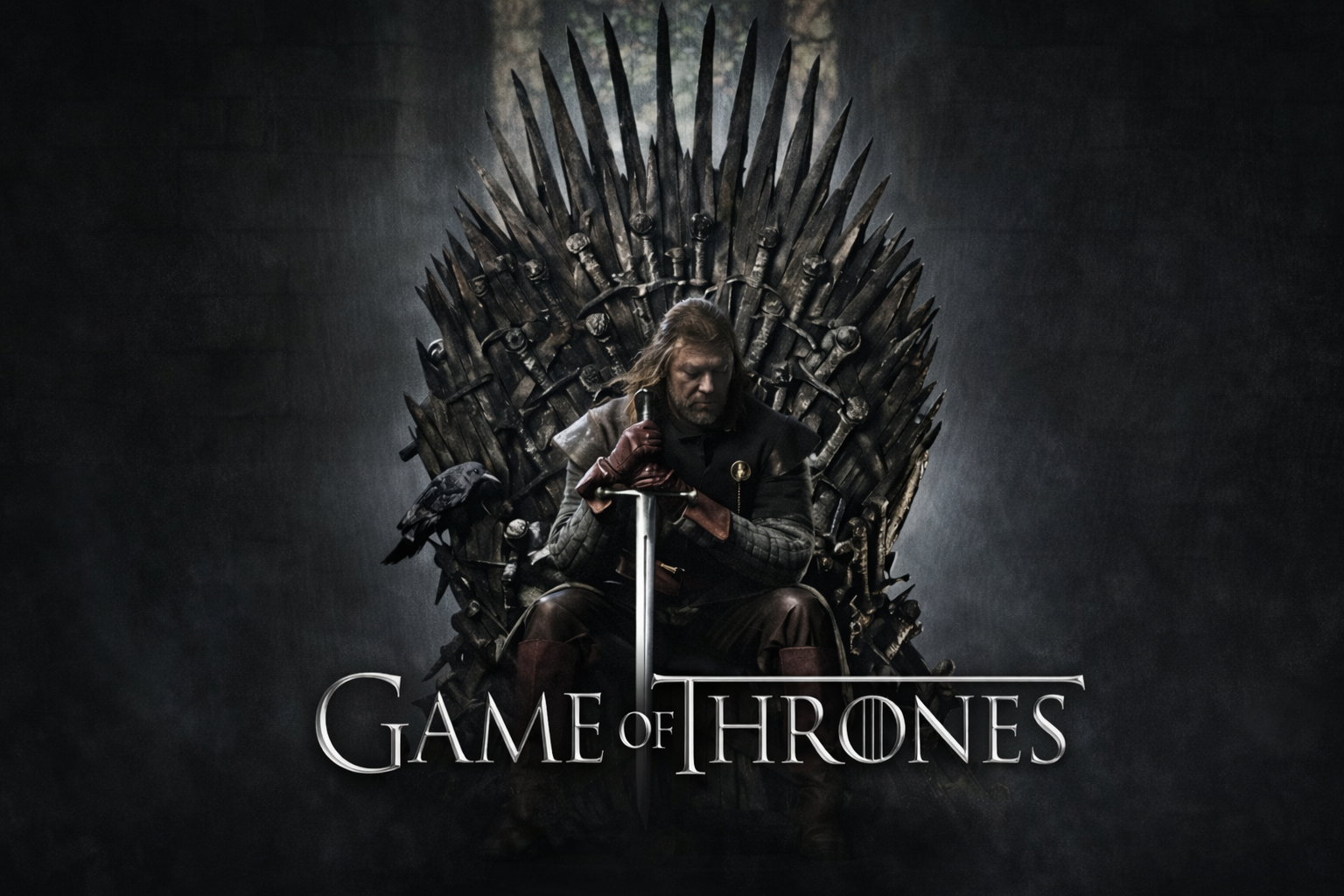
By ChalPakistan, Lahore
Winter did not arrive quietly. It announced itself with steel, fire, and silence that cut deeper than screams. When Game of Thrones began, it did not feel like television. It felt like a long-form cinematic experience unfolding in chapters. Years later, its presence still dominates global culture and continues to appear in serious discussions about the best series to see all time.
From its opening moments, the series made one promise clear. Every choice would carry consequences. Every victory would demand sacrifice. Once viewers entered Westeros, there was no safe distance.
When Television Changed Permanently
Before Game of Thrones, fantasy rarely occupied the center of prestige television. Dragons belonged to cinema. Political drama belonged to historical epics. Television typically avoided blending both at scale.
The arrival of Westeros erased that separation. Weekly episodes became global events. Viewers across continents synchronized their schedules. Discussions continued long after episodes ended. Suspense was collective, and uncertainty became part of the experience.
This shift transformed television from casual viewing into shared cultural participation.
Cinematic Language in Episodic Form
Cinema earns authority through visual scale, emotional restraint, and narrative risk. Game of Thrones adopted these principles consistently.
Episodes unfolded with deliberate pacing. Camera movement emphasized silence as much as action. Dialogue trusted the audience. Decisions altered futures permanently.
Because of this approach, audiences stopped debating whether the series belonged to television or film. The comparison shifted toward whether it deserved recognition alongside the best series to see all time. For many viewers, that comparison felt justified.
A World Rooted in Reality
Westeros never relied on fantasy alone. Its strength came from realism. Armor felt heavy. Hunger shaped politics. Power demanded violence.
The narrative drew inspiration from medieval history, dynastic wars, and fragile alliances. Fantasy elements supported the story but never replaced realism. This grounding made the world believable and emotionally convincing.
Power as Burden, Not Glory
At its core, Game of Thrones examined power without romance. Rulers rarely found peace. Authority came with isolation. Loyalty proved temporary.
Kings fell quickly. Queens paid deeply. Advisors survived by deception. Soldiers died without recognition. Every ascent contained the seed of collapse.
This portrayal aligned the series with serious cinematic storytelling rather than traditional fantasy narratives.
A Narrative Without Protection
Most stories shield their heroes. Game of Thrones refused.
Deaths arrived unexpectedly. Triumphs dissolved into tragedy. Hope carried risk. Viewers remained tense because reassurance never existed.
This refusal to comfort the audience created urgency. Each episode demanded attention. The intensity echoed the structure of classic films that challenge viewers rather than soothe them.
Characters Built on Contradiction
No character existed in moral isolation. Heroes acted selfishly. Villains revealed compassion. Loyalty shifted.
This complexity generated endless debate. Viewers argued over justice, leadership, and survival. Characters felt human because they failed, adapted, and contradicted themselves.
Such depth explains why the series continues to appear in discussions related to the best series to see all time.
Female Power and Its Cost
Women were central to the narrative. They ruled, resisted, adapted, and survived.
Their journeys avoided simplification. Power demanded compromise. Authority carried loss. These portrayals rejected fantasy idealism and reflected lived reality.
Few television series placed women at the center of political and moral conflict with this level of seriousness.
Sound as Emotional Memory
Ramin Djawadi’s score shaped emotional memory. The opening theme became instantly recognizable worldwide. Musical cues triggered anticipation and reflection.
Like great cinema, the series used music to anchor emotion. Years later, the sound alone recalls entire story arcs.
Production That Raised Industry Standards
Before Game of Thrones, television budgets were cautious. After it, ambition became expected.
International locations, large-scale sets, evolving visual effects, and cinematic lighting redefined production standards. Networks adjusted. Streaming platforms followed.
The series altered how stories were funded and how audiences judged quality.
A Global Cultural Event
Few television series achieved similar global reach. Episodes aired simultaneously. Social media reacted instantly. Quotes entered everyday language. Characters became symbols.
This level of engagement resembled blockbuster cinema rather than episodic television.
Debate as Proof of Impact
The series faced continuous criticism. Violence disturbed viewers. Narrative decisions divided opinion. The final season intensified debate.
Yet disagreement sustained relevance. Emotional investment never faded. Silence would have indicated indifference.
Great storytelling invites reaction. Game of Thrones consistently provoked discussion.
The Divisive Conclusion
The finale fractured audiences. Some felt disappointed. Others defended restraint.
Public debate continued long after the final episode. History shows that many influential works face resistance before achieving long-term recognition. The response itself demonstrated how deeply viewers cared.
Influence Beyond Awards
Awards recognized excellence, but influence defines legacy.
Game of Thrones proved audiences would engage with complex narratives that demanded patience and emotional risk. It reshaped expectations for long-form storytelling.
These qualities place it naturally within conversations surrounding the best series to see all time.
Continued Relevance
Modern viewers consume the series differently through streaming. Themes of fear, loyalty, power, and survival remain globally relevant.
Political uncertainty and social tension continue to mirror the conflicts explored in Westeros. Relevance sustains longevity.
The Collapse of Format Boundaries
Screen size no longer defines impact. Emotional depth transcends format.
When episodic storytelling consistently reaches cinematic quality, categories lose importance. Game of Thrones crossed that threshold permanently.
Final Reflection
Game of Thrones was never defined by dragons alone. It was defined by consequence, choice, and survival. Whether evaluated as television or discussed alongside the best series to see all time, its influence remains undeniable. Some stories do not fade quietly. They continue to shape how stories are told.
Read Trusted Stories, Breaking News & In-Depth Blogs – Start Exploring ChalPakistan
FAQs
What is Game of Thrones about?
It follows power struggles among noble families in a fantasy world.
Why is it compared to films?
Its cinematic scale and emotional depth rival feature films.
Is it suitable for all audiences?
The series contains mature themes and violence.
How many seasons does it have?
The show runs for eight seasons.
Why did the ending divide fans?
Many viewers felt the final narrative progressed too quickly.
Is it still worth watching today?
Yes, its storytelling remains impactful and relevant.
How did it change television?
It raised production standards and narrative ambition.
Does it fit discussions of the best movies to see all time?
Many critics and audiences believe it does.
Are there spin-offs available?
Yes, multiple prequels explore the same universe








One Response