By ChalPakistan, Lahore
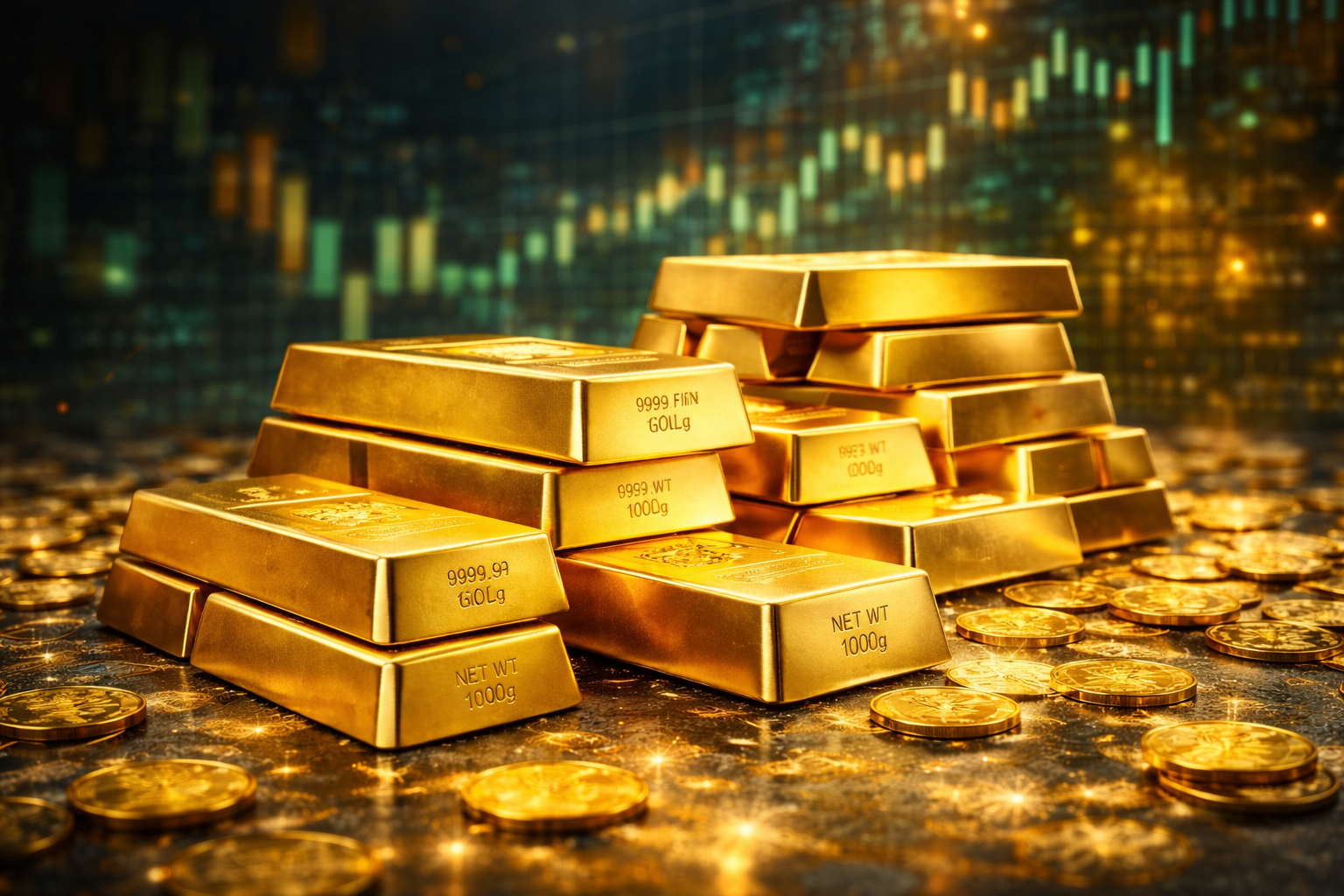
Gold surged past a historic milestone this week, touching the $5,000 mark for the first time and sending shockwaves through global financial markets. Investors reacted with urgency, policymakers watched closely, and ordinary savers asked the same pressing question: why now?
The price of gold crossed $5,000 per ounce during early trading, marking an unprecedented moment in financial history. The move did not happen in isolation. Instead, it reflected a convergence of economic pressure, investor anxiety, and shifting global power dynamics. From Wall Street to South Asia, the spike reshaped conversations around safety, currency stability, and the future of money.
This surge placed gold price today at the center of global attention. Analysts confirmed that the rally began building momentum months ago, but recent events accelerated demand sharply. Central banks increased purchases, investors rushed toward safe assets, and geopolitical tension added fuel to the fire.
This article explains who drove the surge, what triggered it, when momentum intensified, where demand came from, and why gold reached levels once considered unimaginable.
A historic moment for global markets
Gold reaching $5,000 represents more than a price level. It signals a shift in how investors view risk, trust, and long-term value. For decades, gold served as a hedge during crises. This time, the scale of the move suggests something deeper.
Markets reacted immediately. Equity indices wavered, bond yields adjusted, and currency traders reassessed positions. The surge in gold price today reflected a global search for certainty at a time when traditional anchors appeared unstable.
Financial historians noted that previous gold rallies followed inflation shocks, wars, or financial collapses. This rally appears driven by a mix of all three, layered with new digital and political realities.
What pushed gold beyond expectations
Several forces worked together to push gold higher. None acted alone. Instead, each amplified the other.
Rising inflation across major economies weakened purchasing power. Central banks struggled to balance growth with price stability. Interest rate cuts in key regions reduced the appeal of bonds and savings accounts. As yields fell, gold gained relative strength.
At the same time, governments expanded fiscal spending. Higher debt levels raised concerns about long-term currency value. Investors began questioning whether paper assets could preserve wealth over time. These doubts drove capital toward gold.
As demand increased, supply constraints also played a role. Mining output grew slowly, while extraction costs climbed. This imbalance tightened the market further, supporting higher prices.
Central banks reshape demand
One of the most significant drivers came from central banks. Over the past year, monetary authorities increased gold reserves at a pace unseen in decades.
Emerging economies led the trend. Countries sought to reduce reliance on the US dollar and diversify reserves. Gold offered neutrality, liquidity, and independence from political pressure.
China, Turkey, and several Middle Eastern nations expanded holdings aggressively. Their actions signaled a strategic shift rather than a short-term trade. As official demand rose, private investors followed.
This institutional backing strengthened confidence in gold price today and encouraged long-term buying rather than speculative trading.
The role of geopolitical tension
Geopolitical uncertainty added urgency to the rally. Conflicts in Eastern Europe, instability in the Middle East, and trade tensions across Asia unsettled markets.
Sanctions and asset freezes heightened fears about cross-border financial exposure. Investors worried about access to foreign-held assets during political disputes. Gold, held physically or domestically, appeared safer.
These concerns increased gold’s appeal as a neutral store of value. As tensions escalated, demand intensified, pushing prices higher.
Currency volatility fuels the rally
Currency markets played a crucial role. The US dollar weakened against major currencies amid policy uncertainty and rising deficits. Other currencies faced their own challenges, including inflation and capital flight.
As currencies lost strength, gold gained purchasing power. Investors used gold to hedge against devaluation. In countries facing rapid inflation, households turned to gold to protect savings.
This behavior amplified global demand and reinforced upward momentum in gold price today.
Inflation fears return to the spotlight
Although inflation eased in some regions, persistent price pressures kept fears alive. Energy costs fluctuated, food prices rose, and housing affordability worsened.
Consumers felt the strain, and investors responded defensively. Gold benefited from its reputation as an inflation hedge.
Unlike paper assets, gold cannot be printed or diluted. That simple fact regained importance as governments continued expansionary policies.
Investor psychology shifts
Beyond fundamentals, psychology mattered. As gold approached previous records, momentum traders joined long-term investors. Media coverage increased, attracting broader attention.
Once prices crossed symbolic thresholds, fear of missing out spread. This emotional response accelerated buying and reduced selling pressure.
However, analysts cautioned against viewing the rally as purely speculative. Long-term structural forces supported demand, distinguishing this surge from past bubbles.
How markets reacted worldwide
Global markets adjusted rapidly. Stock markets showed mixed reactions, with mining shares outperforming broader indices. Bond yields declined in several regions as capital shifted.
Commodity markets followed gold’s lead. Silver and platinum prices rose, though at a slower pace. Energy markets reacted cautiously, balancing demand concerns with supply risks.
In South Asia, including Pakistan, local gold prices surged sharply. Jewelers reported increased inquiries, while consumers weighed affordability against long-term value.
Impact on Pakistan’s economy
In Pakistan, the surge carried mixed implications. On one hand, higher gold prices increased the value of reserves and private holdings. On the other hand, affordability declined for consumers.
The State Bank monitored developments closely. Currency pressure and import costs remained key concerns. Still, gold’s rise offered a hedge against rupee volatility.
For households, gold price today influenced purchasing decisions, especially ahead of wedding seasons and festivals.
Is gold entering a new era
Many analysts now question whether gold has entered a new valuation era. Structural changes in global finance suggest lasting shifts.
De-dollarization trends, digital currency experimentation, and geopolitical fragmentation all support gold’s relevance. Unlike cryptocurrencies, gold carries centuries of trust and acceptance.
While short-term corrections remain possible, the long-term outlook appears supportive.
Risks and cautions for investors
Despite enthusiasm, risks remain. Rapid price increases can invite volatility. Profit-taking could trigger pullbacks. Policy shifts may alter dynamics.
Investors must assess goals and risk tolerance. Gold offers protection, not guaranteed returns. Diversification remains essential.
Analysts urge caution against overexposure, even as gold price today captures headlines.
What comes next for gold prices
Future direction depends on multiple factors. Central bank policy decisions will shape interest rates and currency strength. Geopolitical developments will influence risk perception.
Supply trends also matter. Mining investment may increase in response to higher prices, though results take time.
For now, gold’s breakout reflects confidence in its role as a stabilizing asset during uncertain times.
Why this moment matters
Gold crossing $5,000 marks a psychological and economic milestone. It reflects deep concerns about inflation, currency stability, and global order.
This moment may influence policy debates, investment strategies, and public perception of value. Gold’s resurgence reminds markets that trust remains central to finance.
As uncertainty persists, gold price today stands as a barometer of global confidence.
Final thoughts
The surge in gold prices did not occur overnight. It built steadily as economic, political, and psychological forces aligned. Crossing $5,000 confirms gold’s enduring role in a changing world.
For investors, policymakers, and ordinary citizens, the rally offers lessons about risk, trust, and preparation. Whether prices hold or adjust, gold’s message resonates clearly.
Read Trusted Stories, Breaking News & In-Depth Blogs – Start Exploring ChalPakistan
Frequently Asked Questions
Why did gold reach $5,000 now
Gold rose due to inflation concerns, central bank buying, and geopolitical uncertainty.
Is gold still a safe investment
Gold remains a traditional hedge against inflation and currency risk.
Will gold prices continue rising
Future prices depend on interest rates, inflation, and global stability.
How does inflation affect gold
Inflation reduces currency value, increasing gold’s appeal as a store of value.
Are central banks still buying gold
Yes, many central banks continue increasing gold reserves.
Does gold protect against currency devaluation
Gold often preserves value when currencies weaken.
Should small investors buy gold now
Investors should assess risk tolerance and diversify portfolios.
How does gold affect Pakistan’s economy
Higher gold prices increase asset values but reduce affordability.
Can gold prices fall sharply
Yes, corrections can occur due to profit-taking or policy changes.
Is gold better than digital assets
Gold offers long-term trust, while digital assets carry higher volatility.